
Unexpected Developments in China's UAV Industry
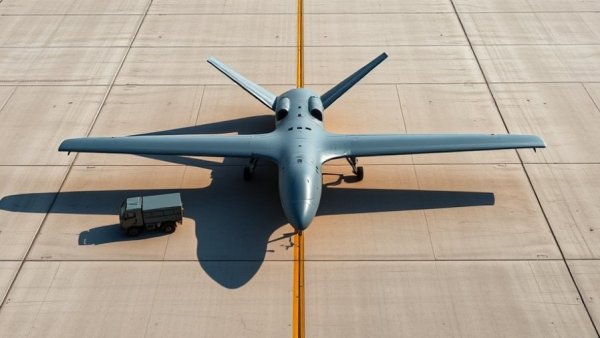
The recent unveiling of a drone at Pucheng Neifu Airport in northwest China highlights intriguing developments in the country’s unmanned aerial vehicle (UAV) sector. With satellite imagery revealing a unit that intriguingly resembles Boeing's MQ-25 Stingray, this sighting signals potentially significant advancements in military and technological capabilities. While the precise function of the drone remains unknown, it appears indicative of China’s ambitions to enhance its naval aviation capabilities through innovative UAV designs.
Design Comparisons: Learning From the MQ-25 Stingray
The MQ-25 Stingray has been developed predominantly to facilitate aerial refueling for U.S. Navy aircraft, thereby extending operational reach and versatility. The newly identified Chinese drone showcases similarities in general design philosophy, possessing a wingspan of approximately 66 feet and a length of 49 feet—dimensions that suggest it could serve analogous purposes within the context of China's military aviation objectives. However, comparative analysis reveals distinct differences: for instance, the Chinese UAV presents a tapered nose design in lieu of the Stingray's broader, flatter structure, potentially pointing toward different operational capabilities or technological directives.
Shifts in Drone Technology and Future Implications
This emerging UAV exemplifies a broader trend within the global drone market, particularly as nations like China escalate efforts in military integration of unmanned technologies. The incorporation of a serrated air intake and the possibility of a bifurcated engine layout point toward advanced engineering solutions focused on reducing radar signatures, which could enhance stealth capabilities. Such developments are crucial as they align with the global race for tactical superiority within aerial combat scenarios. Should these capabilities be confirmed, they could represent a transformative moment in the capabilities of China's naval air power, impacting regional security dynamics.
Location Matters: Pucheng's Role in Aviation Innovation
Pucheng Neifu Airport, home to this innovative UAV, is strategically positioned within a larger aerospace industrial network. The surrounding facilities, including the National Aeronautics Industrial Base, illustrate how localized clusters can accelerate technological advancements and production efficiencies. This infrastructure supports not only military applications but also broader commercial UAV initiatives that may emerge from this development hub, potentially leading to dual-use technologies that serve both civilian and military purposes.
Understanding the Competitive Landscape
The implications of this drone discovery stretch beyond its mere existence; it highlights the competitive nature of global UAV development. As nations strive to outpace one another in technological capabilities, understanding how companies and governments leverage such technologies can provide insights into future defense strategies and innovations. This emergence of UAVs similar to Western designs raises questions about intellectual property, innovation controls, and the global dynamics of aerospace technologies.
Conclusion: The Road Ahead for UAV Technology
As the landscape for unmanned aviation evolves, continuous monitoring of advancements in places like Pucheng will provide critical insights into the future of military and civilian drone capabilities. Keeping an eye on China’s developments in UAV technology, especially with drones resembling the MQ-25 Stingray, will be crucial for understanding broader geopolitical implications and innovation trajectories in the aerospace realm.



Write A Comment