

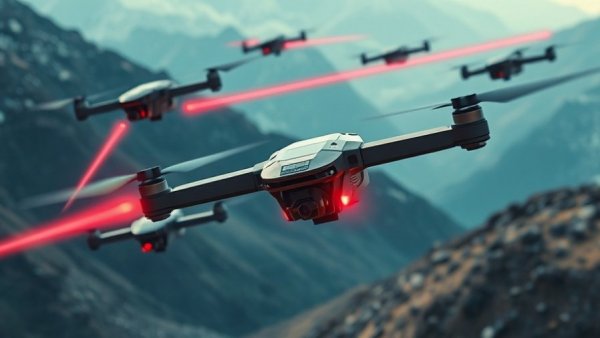
Unveiling the Pentagon’s Next Steps in Drone Defense
The Pentagon is stepping up its game in drone defense technology with the invitation of seven industry teams to participate in Phase II of the Directed Energy Counter-Unmanned Aerial Systems (C-UAS) evaluation. This phase will culminate in a live-fire technology evaluation set to occur at the Dugway Proving Ground in mid-December, showcasing how laser systems can effectively neutralize unmanned aerial threats.
Understanding the Participants and Their Technologies
The chosen partners have presented innovative high-energy laser platforms to the table, each promising advanced capabilities for target engagement. The selected teams include:
- Allen Control Systems: BULLFROG HEL
- Aurelius Systems: ARCHIMEDES
- AeroVironment (BlueHalo): LOCUST X1
- Kord Technologies: FIREFLY
- Lockheed Martin (IPG): Crossbow system
- Thor Dynamics: LASER ARMOR HEL system
- Yrikka: TALOS drone-based HEL system
These systems are designed not just to track but to neutralize threats effectively—offering a promising future for laser-based aerial defense technology.
The Road Ahead: Preparing for Live-Fire Evaluations
As preparations for the live-fire exercises ramp up in November, teams are undertaking rigorous laser safety certifications alongside the integration of command-and-control (C2) systems. This preparatory phase ensures each system is ready for the demands of the live-fire evaluations, where they will face real-world drone threats.
“We’re trying to structure the shoot-off in such a way that systems that perform effectively can immediately lead to purchase orders,” stated Brig. Gen. Matthew Ross, emphasizing the urgency to transition successful technologies to production and deployment.
The Importance of Directed Energy Technology
The Department of Defense categorizes scaled directed energy as one of its six critical technology areas, highlighting its significance. These innovations promise not only to reduce operational costs through a low-cost per shot defense capability but also accelerate the fielding of systems responsive across multiple combat domains.
The potential for directed energy systems to reshape military engagements is substantial, offering solutions to counter the asymmetric threats posed by drones. As these technologies continue to evolve, the implications extend beyond military applications; successes in this field may enhance public safety measures against unauthorized drone incursions into sensitive areas.
Final Thoughts: The Future of Drone Defense
With the live-fire evaluation approaching, all eyes will be on the participating teams and their technologies. The execution of effective countermeasures against drone threats during these tests will not only demonstrate the capabilities of directed energy systems but will also help inform future military strategies and defenses.
As industry and defense sectors converge on innovation, the successful deployment of these C-UAS technologies could mark a new chapter in national security maneuvers, offering a robust defense against evolving aerial threats on the horizon.


Write A Comment