

cropper
Drone Central Station
  • Home
  • Categories
    • Drone Tech
    • Drone Applications
    • Drone Racing
    • Accessories
    • Real Estate
    • Military
    • Disaster
    • Drone Footage
    • Product Reviews
    • Business Profiles
November 25.2026
2 Minutes Read

Pentagon Eyes Production Help from GM and Ford for Military Drones

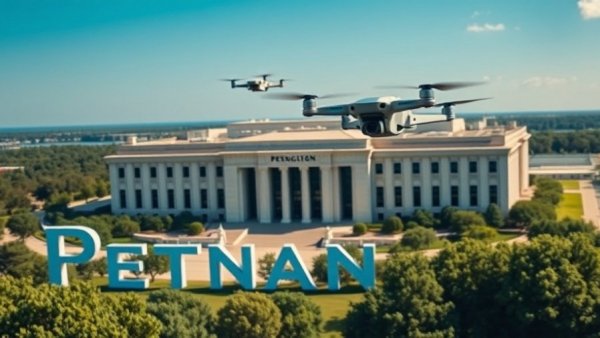
Pentagon with drones and corporate logos, aerial view

Pentagon Unveils Ambitious Drone Production Plans

The Pentagon's recent discussions with automotive giants General Motors and Ford signal a significant shift in military drone production strategies. As geopolitical tensions rise, defense expenditures are swelling, and the need for robust drone capabilities has never been more pressing. Analysts speculate that while opportunities for automotive companies in defense are growing, they're not without risks.

Why the Defense Sector is Eyeing Automakers

The U.S. military has set its sights on acquiring millions of drones in the coming years, but current domestic manufacturers lack the infrastructure and capacity to meet this surging demand. Automakers like GM and Ford possess established supply chains and proven manufacturing capabilities, which could fill this gap effectively. Their expertise could prove essential, particularly as automakers branch out beyond traditional vehicle production into defense and aerospace.

Historical Production Alignment and Future Prospects

Historically, auto manufacturers have produced items for military applications without directly crossing into weapons manufacturing. For instance, Ford and GM partnered with defense contractors earlier this year to supply prototype vehicles for the U.S. Army's Infantry Squad Vehicle program. Additionally, GM aims to double its defense revenue to over $2 billion as it sees potential in military contracts.

Ford has recently invested in Revolution Space, aiming to leverage its manufacturing capabilities for spacecraft production, reaffirming the auto industry’s commitment to diversify into aerospace amid shrinking automotive margins.

Opportunity or Challenge for the Automotive Sector?

The Pentagon's involvement could reshape how auto companies approach drone production. With the military drone market projected to reach $20 to $30 billion annually, some executives are intrigued by the prospects of new revenue streams. However, they remain cautious about profitability. The lower margins on expendable drones could result in significant losses, raising questions about the long-term viability of this pivot.

A Growing Focus on Manufacturing Partnerships

Moving forward, manufacturers may need to reconsider their positions as collaborations between traditional auto companies and tech-oriented drone manufacturers expand. Deals for components like motors and sensors could evolve, reinforcing the interconnectedness between the automotive and defense industries.

Future Considerations

Ultimately, the alliance between the Pentagon and automotive companies could revolutionize the drone production landscape, making military-grade drones more accessible. This shift holds not only implications for defense but may also foster advances in unrelated sectors like consumer and commercial drone technology. Keeping an eye on this developing narrative could offer insights into emerging market dynamics.

As we continue to explore this burgeoning partnership between the Pentagon and automotive firms, industry professionals and tech enthusiasts alike should engage in discussions surrounding the future of drone technology and the opportunities that lie ahead.
Military

3 Views

0 Comments

Write A Comment

*
*
Please complete the captcha to submit your comment.
Related Posts All Posts
11.25.2026

Germany Invests €34 Million for Advanced Ukrainian Reconnaissance Drones

Update The Rise of the BABKA Reconnaissance Drone As tensions continue to escalate in Ukraine, the introduction of new technology has become crucial in bolstering defensive capabilities. The recent announcement from German Federal Minister of Defence, Boris Pistorius, highlights a significant investment towards supporting Ukraine with advanced reconnaissance solutions. With a funding allocation of approximately €34 million, TAF Industries and Wingcopter Security & Defence are set to kick-start the mass production of the innovative BABKA reconnaissance drone in Germany. German Support for Ukrainian Defense In a press briefing held in Berlin alongside Ukrainian counterpart Yevhenii Khmara, Minister Pistorius emphasized the pressing need to enhance production of drones that have proven effective in Ukraine’s defense efforts. "We will ramp up production of drones that have proven particularly effective in Ukraine’s defensive battle, especially important right now, this winter,” stated Pistorius. The emphasis on winter operations indicates an urgent strategic response to ongoing conflict conditions. Joint Venture: What is the BABKA Drone? The BABKA drone is designed to meet the rigorous demands of the Ukrainian Armed Forces. As a low-cost reconnaissance UAV, the BABKA boasts impressive specifications, including a 30x optical zoom, a 3-hour flight time, and a tactical range of 50 km. Furthermore, its lightweight design—at just 3 kg and a wingspan of 130 cm—facilitates low-cost mass production, making it accessible for wider military deployment. Expanding Capabilities with the Wingcopter 262 In addition to the BABKA, the partnership will also produce the Wingcopter 262, a drone noted for its longer endurance and advanced features, including an 80x optical zoom and a flight time of 6 hours. With a tactical range of 150 km and weighing less than 10 kg, the Wingcopter 262 adds depth to the operational capabilities available to Ukrainian and NATO forces. Implications for the Future of Drone Technology This venture represents a growth phase for drone technology within military applications, particularly in Europe. As NATO and its member states explore enhanced drone capabilities, this could pave the way for similar collaborations aimed at improving defense strategies—especially given the urgency and success of drone reconnaissance in current conflicts. Conclusion: The Importance of Innovation in Conflict The move towards localized drone production not only supports Ukraine in its current conflict but signals a shift towards more self-sufficient defense sectors within Europe. As technology plays a critical role in modern warfare, understanding the advancements in drone capabilities becomes paramount for industry professionals and enthusiasts alike. The strategic utilization of drones like the BABKA and Wingcopter 262 may work to redefine the dynamics of 21st-century warfare.

11.25.2026

Turkey Makes History with KIZILELMA Unmanned Fighter Jet in Service

Update Baykar’s KIZILELMA: A New Era in Fighter Technology Turkey has officially entered the annals of aviation history with the induction of the KIZILELMA, its first unmanned fighter jet developed entirely by Baykar. This revolutionary aircraft marks a critical milestone in the global landscape of military technology, as Turkey becomes the first nation ever to include an unmanned fighter jet in its defense inventory. With a string of successful operational tests and public displays, the KIZILELMA is not just a technological marvel but also a symbol of national pride. Impressive Progress Toward Operational Status Since the KIZILELMA's test and training program began, the jet has completed an impressive 600 sorties, paving the way for its operational readiness. Its delivery to security forces on November 19, 2026, signifies the culmination of years of research and development, begun with its first design unveiling on July 20, 2021. This jet's operational milestones—including publicly showcasing its capabilities during TEKNOFEST Istanbul—underscore its significance as a beacon of innovation and national achievement. Setting Historical Records in Combat Capabilities Unlike any fighter jet before, KIZILELMA has pushed the boundaries by performing air-to-air combat with advanced precision. Historical tests have seen the KIZILELMA hit a jet-powered target with a beyond-visual-range missile, a feat never before accomplished by an unmanned platform. Integrating various munitions and systems has further enhanced its operational prowess, exemplifying its unique value in modern warfare. Strategic Implications and Future Prospects The introduction of KIZILELMA holds critical strategic significance, particularly for countries seeking an edge in aerial combat technology. Experts suggest that unmanned aerial vehicles like KIZILELMA will play increasingly prominent roles in military operations, potentially revolutionizing air combat. The use of intelligent fleet autonomy and joint operations with manned aircraft represent a paradigm shift in how militaries may conduct future engagements. Emotional Resonance and National Pride For many, the KIZILELMA represents more than a military asset; it is a source of national pride. As Turkey approaches its centennial, the successful deployment of this unmanned fighter highlights the nation’s ambitions to be a global player in advanced defense technologies. The communal celebration surrounding its induction resonates deeply within the local populace, reflecting aspirations of innovation and self-reliance. Conclusion: The Dawn of a New Age The KIZILELMA not only pushes the envelope of technological capabilities but potentially sets a precedent for other nations to follow. As Turkey continues to advance in unmanned technologies, the implications for global defense paradigms are profound. Understanding and engaging with these innovations becomes essential as they shape future military operations and strategies.

11.22.2026

How Ukraine’s Relay Drones Redefined Military Communication in the Kerch Attack

Update Unveiling Ukraine's Technical Ingenuity In a remarkable display of technological adaptation, Ukraine's recent missile and drone strike on the Kerch Strait Bridge exemplifies how military strategies are evolving amidst geopolitical tensions. This operation, which effectively dismantled a vital connection for Russia, reveals not just a tactical triumph but also a significant shift in reliance on commercial technologies and indigenous innovations. Disruption Through Innovation: The Relay Drone Network Unlike previous attacks that relied on Elon Musk's SpaceX Starlink satellites, Ukrainian forces utilized a sophisticated army of drones equipped with mesh radio systems. This allowed them to create an airborne communications network, facilitating operations from over 250 kilometers away. Each drone acted as a relay point, maintaining communication between operators on the ground and their deployed drones and missiles. Such ingenuity mirrors tactics previously employed by Russian forces but marks a critical point of evolution for Ukrainian warfare. Sovereignty in Communication: Avoiding Starlink The decision to bypass Starlink for military operations reflects Ukraine's strategic necessity due to recent US restrictions on the military-grade Starshield version of the satellite network. President Zelenskyy highlighted how these limitations hamper defensive capabilities against Russian drones. Confronted with these challenges, Ukraine's ability to innovate and repurpose technology emphasizes its resilience in the face of adversity. This operational independence not only showcases the determination of Ukrainian forces but also signals a pivotal moment in military technology use, where reliance on a single provider for communication is being reconsidered. Strategic Implications of the Kerch Strait Bridge Attack The destruction of this $3.5 billion bridge not only hinders Russian supply lines but also reinforces Ukraine's operational tempo. The Kerch Strait Bridge was a symbol of Russian claims over Crimea, and its damage represents a significant psychological as well as logistical blow for Russia. Experts contend that even if Russia attempts to repair the structure, ongoing Ukrainian strikes could render these efforts futile, thus prolonging disruption to critical supply routes. The Broader Impact: Ukraine's Evolution in Warfare Historically, warfare has seen cycles of innovation, with nations constantly adapting technologies to fit their strategic needs. Today's landscape, characterized by the interplay between civilian tech adaptations for military use, demonstrates how quickly the theater of war can evolve. Ukraine has been quick to absorb lessons learned from both sides of the conflict, continuing to refine its tactics and technology. Concurrently, this operation emphasizes the growing importance of networks and decentralized communication strategies, a practice that could shape future conflicts globally. As the conflict progresses, the implications of these technological strategies may influence broader military doctrine and provoke discussions on the intersection of civilian technology and military operations. This incident prompts a re-evaluation of how nation's defenses are structured and how quickly they can pivot in response to external threats. In summary, the events surrounding the Kerch Strait Bridge are indicative of a larger narrative unfolding on the international stage—the question of how nations adapt and innovate when faced with new challenges. For those engaged in the tech and defense sectors, the lessons drawn from Ukraine’s experience promise insightful revelations about resilience and the future of warfare.

Drone Central Station

Drone Central Station is your HQ for all things drone. Keep up-to-date with advances in drone tech, drone usage, and new products. Get tips, product reviews, and more.

  • Drone Central Station

COMPANY

  • Privacy Policy
  • Terms of Use
  • Advertise
  • Contact Us
  • Menu 5
  • Menu 6

(510) 393-8174

AVAILABLE FROM 8AM - 5PM

City, State

, Oakland, CA

ABOUT US

Drone Central Station is your HQ for all things drone. Keep up-to-date with advances in drone tech, drone usage, and new products. Get tips, product reviews, and more.

© 2026 CompanyName All Rights Reserved. Address . Contact Us . Terms of Service . Privacy Policy

Terms of Service

Privacy Policy

Core Modal Title

Sorry, no results found

You Might Find These Articles Interesting

T
Please Check Your Email
We Will Be Following Up Shortly
*
*
*