
cropper
update
Drone Central Station
update
  • Home
  • Categories
    • Drone Tech
    • Drone Applications
    • Drone Racing
    • Accessories
    • Real Estate
    • Military
    • Disaster
    • Drone Footage
    • Product Reviews
    • Business Profiles
August 27.2025
3 Minutes Read

Why US Navy Pilots Must Foster Trust in Their Drone Wingmen

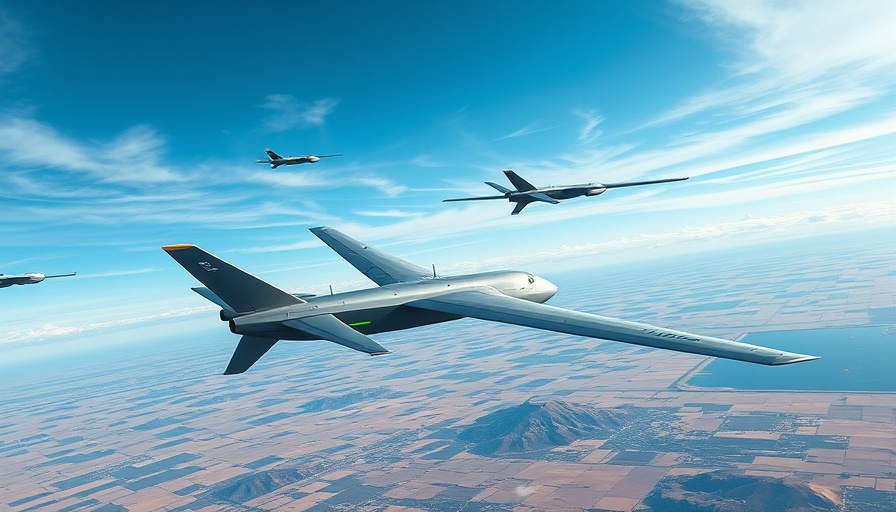
Advanced UAVs flying in formation, Trust in Pilotless Wingmen display.

Understanding the Need for Trust in Drone Technology

As technology in military aviation rapidly evolves, U.S. Navy fighter pilots must learn to trust their new drone wingmen, referred to as Collaborative Combat Aircraft (CCAs). Lt. Cmdr. Mark “Tugboat” Jbeily highlights that this trust is fundamental, paralleling the trusting relationships pilots have built with their human counterparts over the years. He emphasizes that trust in flying, whether with a person or a machine, will dictate how the Navy integrates and utilizes these advanced unmanned systems in both training environments and operational scenarios.

The Role of Collaborative Combat Aircraft (CCAs)

CCAs represent the next frontier in military aviation, enabling a seamless partnership between manned and unmanned aircraft. The integration of these drones into air wings is a critical component of the Navy's strategic vision. Jbeily's comments underscore the ongoing conversation about the specific characteristics of these platforms, designing them to carry out missions alongside human pilots while ensuring reliability, predictability, and performance consistency. For example, if a human pilot knows their drone will respond accurately in line with expected behaviors, it enhances their operational effectiveness and overall mission success.

Importance of Live, Virtual, and Constructive Training

For pilots to gain confidence in CCAs, the Navy is exploring training methods that incorporate live, virtual, and constructive (LVC) methodologies. By blending real-life scenarios with simulation, pilots can interact with drones in various operational contexts before facing real combat situations. This approach allows aviators to practice trust-building exercises organically, addressing potential fears or uncertainties they may have when flying alongside autonomous machines. The Navy aims to create training regimes that narrow the trust gap present in current unmanned airmanship.

Counterarguments and Diverse Perspectives in Aviation Autonomy

While many welcome advancements in drone technology, skepticism remains prevalent among aviators regarding unmanned systems. Critics argue that relying on automated aircraft could lead to unforeseen consequences in high-stakes situations where human intuition proves invaluable. Jbeily acknowledges these concerns, asserting that a solid integration strategy involving pilot input is crucial. By fostering understanding and collaboration, future endeavors can address these critiques and enhance the reliability of collaborative manned and unmanned missions.

Future Trends in Military Aviation

As military technology continues to innovate, the future of air combat might look significantly different than today. Jbeily forecasts an imminent shift toward more dependable and robust drone interactions as technological advancements unfold. Apart from CCAs, there may be additional applications in intelligence, surveillance, reconnaissance, and payload delivery, all of which hinge on mutual trust between pilots and autonomous systems. As these drones evolve, the need for rigorous training and trust-building in collaborative operations will only become more relevant.

In conclusion, the evolution of military aviation hinges on trust—the trust between human pilots and their drone counterparts. As the Navy invests in CCAs and innovative training methodologies, establishing a robust framework of trust will ensure both safety and effectiveness in future combat scenarios. Understanding these dynamics will shape the discourse surrounding emerging technologies in military aviation.

Military

32 Views

0 Comments

Write A Comment

*
*
Please complete the captcha to submit your comment.
Related Posts All Posts
04.23.2026

Unveiling Ukraine's Advanced Arsenal: How Technology is Redefining Military Power

Update Ukraine's Defense Technology Revolution: A Game Changer in Military Strategy President Volodymyr Zelenskyy's recent video address marking Ukraine's Arms Makers’ Day was more than just a celebration; it was a powerful demonstration of the country's rapid military transformation. Showcasing an arsenal of 56 domestically developed weapons systems, including an impressive array of 31 drones, seven missiles, and an assortment of robotic and naval platforms, Ukraine has proved its resilience and innovative spirit in defense technologies. This showcase illustrates how Ukraine's military has evolved significantly since the onset of conflict, enabling a more robust defense strategy. The Arsenal: A Closer Look at Advanced Ukrainian Weapons Among the showcased weaponry, the long-range Flamingo missile stands out, capable of striking targets up to 3,000 kilometers away and designed for strategic warfare. The Flamingo, alongside other advanced missile systems like the Ruta and Peklo, emphasizes Ukraine's focus on developing precision strikes to effectively counter threats. Drones have also emerged as a pivotal element in this arsenal, with the Sichen and Liutyi kamikaze drones leading the charge. Their long operational ranges of 1,400 and 2,000 kilometers respectively demonstrate Ukraine's commitment to maintaining an edge in aerial combat. Robotics in Warfare: Transforming Combat Dynamics Ukrainian ground robotic systems are redefining battlefield strategies, having performed over 22,000 missions on the frontlines in just three months. These unmanned platforms, such as the RATEL H and TerMIT, serve critical roles in logistics, casualty evacuation, and fire support, underscoring their growing significance in modern warfare. This development highlights a strategic shift where human soldiers are supplemented—or even replaced—by robotic systems capable of carrying out complex operations with reduced risk. Naval Innovations: Securing Maritime Operations Ukraine’s naval capabilities are evolving as well, with systems like the Sea Baby and Magura V5 drones marking significant advancements for maritime security. The Magura V5 has even been recognized for sinking a warship, an unprecedented achievement that illustrates the tactical advantages provided by drone technology in naval environments. This evolution emphasizes how Ukraine is adapting to multifaceted threats from adversaries both on land and at sea. International Collaboration and Future Trajectories Zelenskyy's address also emphasized shifting from a focus on internal defense to establishing long-term security partnerships with other nations. By showcasing Ukraine's capabilities, he aims to attract interest in collaborative defense initiatives, reinforcing a network of mutual support that could enhance Ukraine's international standing. As evidenced by ongoing dialogues with Middle Eastern countries regarding military partnerships, this strategic repositioning suggests that Ukraine is not merely defending its territory but is actively engaging on the global stage. Concluding Thoughts: The Path Forward The unveiling of over 50 types of weaponry not only highlights Ukraine’s advancements in military technology but signals a significant shift in warfare dynamics. As the conflict continues to evolve, Ukraine's focus on harnessing innovative, cutting-edge technologies will play a crucial role in its defense strategy. Keeping abreast of these developments is essential for understanding the broader implications for both regional and global security in the coming years.

04.23.2026

The LOCUST Laser Weapon System: A New Era for Naval Defense Technology

Update Navigating the Future of Warfare: The LOCUST Laser Weapon System AeroVironment, Inc. has taken a significant step in modern military technology with the demonstration of its palletized LOCUST Laser Weapon System (LWS) aboard the USS George H.W. Bush (CVN-77). This test, conducted in collaboration with the U.S. Navy and the U.S. Army Rapid Capabilities and Critical Technologies Office (RCCTO), marks a milestone in the deployment of directed energy weapons on naval platforms. The successful live-fire event showcased the LOCUST system's capability to detect, track, and neutralize multiple target drones, a promising advancement in counter-drone technology. Understanding LOCUST’s Capabilities and Flexibility One of the standout features of the LOCUST LWS is its platform agnosticism. Designed to operate seamlessly across various platforms—from ground vehicles like the Joint Light Tactical Vehicle (JLTV) to maritime vessels—the system exhibits a remarkable adaptability to different military contexts. John Garrity, AeroVironment's Vice President of Directed Energy Systems, emphasized its game-changing role by stating, "LOCUST delivers effective, all-domain protection against emerging drone threats at the speed of light—on any platform, in any domain, for any mission." This adaptability not only increases operational flexibility but also enhances the Navy's defense posture without necessitating extensive ship modifications. The Importance of Precision and Energy Efficiency Lasers, such as those utilized in the LOCUST system, provide a high degree of accuracy and efficiency. Unlike traditional munitions, which have a defined scope and impact, laser systems operate with virtually unlimited engagement potential as long as power is available. This characteristic allows for the defense against numerous drone threats rapidly—an essential capability given the projected increase in uncrewed aerial systems in contemporary warfare. The LOCUST system can recharge its batteries while connected to the ship's power supply, creating a logistic advantage and reducing the need for extensive ammunition storage. Military Significance: A Turning Point in Defense Technology The demonstration aboard the USS George H.W. Bush is more than just a test; it highlights a significant pivot toward reliance on directed energy solutions within the Navy. Chief of Naval Operations Adm. Daryl Caudle has expressed his vision for directed energy weapons to become the primary defense against close-in threats. This capability not only enhances national security but also positions U.S. military forces at the forefront of modern warfare technology. Challenges and Future Predictions for Laser Systems Despite the promising developments, the deployment of directed energy weapons like the LOCUST system comes with challenges. The effectiveness of laser systems can diminish over distance and be affected by atmospheric conditions, which poses specific operational hurdles. Moreover, maintaining laser systems aboard ships introduces issues of reliability under harsh maritime conditions. Nevertheless, the Navy’s willingness to invest in these technologies suggests a commitment to overcoming these challenges, indicating that future advancements in laser power and reliability may reshape naval defense strategies. As technological advancements continue, the potential applications of LOCUST could expand beyond counter-drone operations, potentially fending off a spectrum of aerial threats. The increased integration of artificial intelligence and machine learning could enhance the decision-making capabilities of these systems, ensuring a faster response to threats and allowing for a proactive defense strategy. Conclusion: The Call for Enhanced Counter-Drone Defenses The successful demonstration of the LOCUST Laser Weapon System aboard the USS George H.W. Bush underscores a transformative moment in military technology. As threats evolve, so must our defense capabilities. Engaging with these developments not only highlights the Navy’s strategic adaptation but also invites industry professionals and technology enthusiasts to consider their prospective roles in shaping future innovations in military technology. Joint conversations surrounding the implementation and expansion of such systems could provide invaluable insights into the national security landscape and how best to protect our forces.

04.22.2026

GA-ASI and US Navy Join Forces for Collaborative Autonomy Mission Planning

Update GA-ASI Partners with US Navy for Next-Gen Mission Planning In a landmark development for military operations, General Atomics Aeronautical Systems, Inc. (GA-ASI) has been selected by the United States Navy to advance collaborative autonomy in mission planning and debriefing. This initiative directly aligns with the Navy's commitment to enhancing operational efficiencies through cutting-edge technology and artificial intelligence. The Rise of Collaboration in Autonomous Systems The integration of collaborative autonomy into military drones is not just a technological upgrade; it signifies a shift in how military operations are coordinated and executed. Utilizing advanced algorithms and AI, these autonomous systems can communicate more effectively, analyze vast amounts of data swiftly, and make informed decisions that would traditionally take human operators much longer. The ability to streamline mission planning can significantly enhance responsiveness in complex scenarios. Seamless Planning and Effective Debriefs The project aims to develop systems that enable seamless mission planning combined with efficient debriefing processes. This dual capacity ensures that insights gained from previous missions can inform future operations, creating a continuous feedback loop that enhances strategic effectiveness. Potential Impact on Military Operations As military engagements become increasingly complex, leveraging technology like the one provided by GA-ASI can lead to surprisingly swift operational adjustments. With faster decision-making capabilities, troops can better adapt to fast-changing situations on the ground. This independence enables personnel to focus on higher-level strategic thinking rather than getting bogged down in data analysis. Future of Autonomy and Its Broader Implications The implications of this collaboration extend beyond just military applications. The technologies leveraged within this partnership could soon find their way into commercial spaces, signaling a transformative era where autonomous systems permeate various sectors, from logistics to disaster response. As industries continue to embrace these advancements, the potential for enhanced efficiency and safety becomes monumental. Expert Opinions and Industry Reactions Industry experts have commended this move towards increased autonomy, highlighting the potential for reducing human error during critical missions. By enabling drones to function collaboratively with minimal human oversight, operations can achieve levels of coordination previously thought unattainable. Why This Matters to Tech Enthusiasts and Industry Professionals For tech enthusiasts and professionals, this initiative serves as a pivotal case study in advanced technology adoption. Understanding how collaboration in drone systems could reshape operational strategies provides valuable insights into the evolution of both military and civilian applications of technology. Stay Updated on Advances in Autonomous Technologies The rapid pace of innovation indicates that developments in drone technology and collaborative autonomy are only just beginning. Keeping abreast of these changes could yield significant benefits for professionals in various fields. For those interested in the forefront of tech advancements, engaging with platforms that examine these trends will be crucial for remaining competitive and informed.

Terms of Service

Privacy Policy

Core Modal Title

Sorry, no results found

You Might Find These Articles Interesting

T
Please Check Your Email
We Will Be Following Up Shortly
*
*
*