
cropper
update
Drone Central Station
update
  • Home
  • Categories
    • Drone Tech
    • Drone Applications
    • Drone Racing
    • Accessories
    • Real Estate
    • Military
    • Disaster
    • Drone Footage
    • Product Reviews
    • Business Profiles
August 19.2025
2 Minutes Read

Why ParaZero's New Counter-Drone Technology Matters for Public Safety

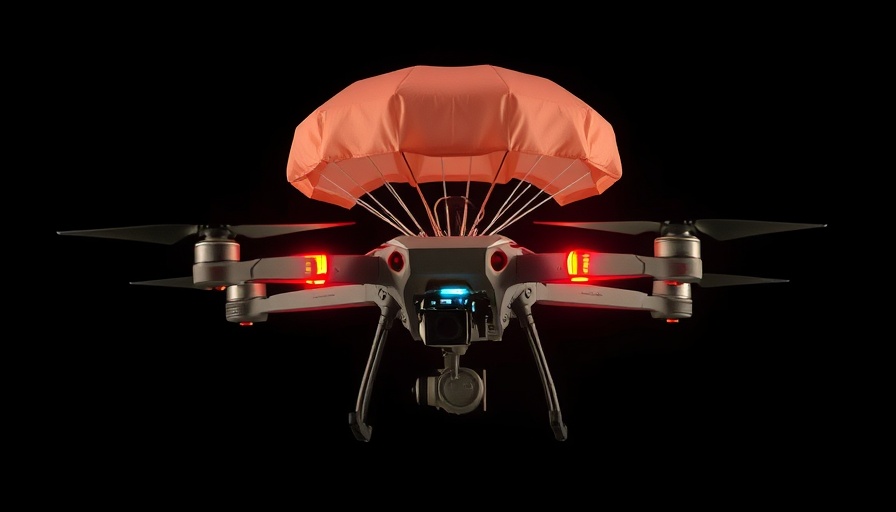
Counter-Unmanned Aerial Systems technology with a parachute.

The Rising Need for Counter-Drone Solutions

In today’s rapidly advancing technological landscape, drones have become ubiquitous, offering applications ranging from aerial photography to logistics and surveillance. However, this proliferation has not come without challenges; drones pose significant risks, especially in sensitive areas like military operations and public events. Recognizing this duality, companies like ParaZero Technologies Ltd. are stepping up to provide robust solutions to these growing threats.

ParaZero's Innovative C-UAS Technology

ParaZero’s Counter-Unmanned Aerial Systems (C-UAS) technology stands out as a vital defense mechanism against unauthorized drone activity. This solution not only neutralizes aerial threats efficiently but also safeguards critical infrastructure. By ensuring minimal disruption during the neutralization process, ParaZero is addressing the challenges that many industries face as drone usage escalates.

Market Trends and Future Growth

The landscape for anti-drone technology is evolving, evidenced by the substantial market growth anticipated in the coming years. Recent market analysis values the global anti-drone market at $3.1 billion in 2025, projected to explode to $12.24 billion by 2032 with a remarkable CAGR of 21.62%. This booming market underscores a significant shift in how organizations approach aerial security, paving the way for increased investment in technologies like those offered by ParaZero.

Securing Trust and Partnerships

ParaZero's recent purchase order from a reputable defense agency serves as a strong endorsement of their technology and highlights the industry’s need for reliable drone mitigation systems. CEO Ariel Alon remarked, "Securing another order from a prestigious defense organization is a strong testament to the trust in our technology." This affirmation speaks volumes about the increasing reliance on advanced tech solutions for safety and operational stability in defense and beyond.

The Importance of Staying Ahead

As drone-related incidents increase, governments and corporations must stay ahead of unlawful usage. The relevance of ParaZero's technology transcends beyond just military applications; it extends to public safety, protecting civilian events from potential threats. By implementing comprehensive C-UAS solutions, organizations can navigate the challenges of drone integration while ensuring safety measures are firmly in place.

Embracing a Safer Future

With the surge in drone adoption, the demand for effective countermeasures is more pressing than ever. Technologies like ParaZero’s C-UAS are not just innovative; they are essential components for safeguarding our society in increasingly complex airspace. For tech enthusiasts, industry professionals, and drone hobbyists alike, it is crucial to recognize and invest in such advancements that shape a safer future.

In conclusion, the rapid evolution of the drone landscape necessitates dynamic solutions. ParaZero’s commitment to enhancing security through groundbreaking technology highlights the synergy between innovation and safety. As we continue to integrate more drones into our everyday lives, understanding and supporting advancements in counter-drone technology becomes paramount.

Drone Tech

33 Views

0 Comments

Write A Comment

*
*
Please complete the captcha to submit your comment.
Related Posts All Posts
04.24.2026

Electric VTOL Revolution: UK CAA’s Ambitious Plans for 2028 Flights

Update Revolution in Air Travel: What the UK CAA's Roadmap Means for eVTOLThe UK Civil Aviation Authority (CAA) has recently unveiled its ambitious framework for electric vertical take-off and landing (eVTOL) aircraft, aiming for commercial flights to commence by 2028. With eVTOL technology advancing rapidly, this roadmap represents a pivotal moment for the aviation industry, aligning regulatory mechanisms with innovative flight systems.Transformative Potential of eVTOL AircraftElectric VTOL technology promises to redefine urban mobility, significantly impacting city infrastructure and transportation networks. By 2028, the UK government envisions a scenario where eVTOL flights could alleviate congestion on roads and revolutionize how city dwellers commute. The anticipation surrounding this innovation is palpable among tech enthusiasts, as eVTOLs are expected to merge efficiency with sustainability, reducing carbon emissions in the aviation sector.Regulatory Framework: Safety FirstTo produce a viable eVTOL operation environment, the CAA's proposed regulatory framework aims to assure public safety through stringent airworthiness and licensing standards. It categorizes eVTOLs as "complex motor-powered aircraft," thereby upholding legacy aviation safety standards while integrating advanced technological solutions. This classification illustrates a significant recognition of the complexity and potential risks associated with eVTOL operations, ensuring that safety remains paramount as the sector evolves.Challenges Ahead: Integration Into Existing AirspaceA primary concern for the smooth rollout of eVTOL flights is effective airspace integration. Current air traffic management systems will need to adapt to accommodate these new aircraft types, which may require revisions in operational protocols. The CAA is actively working on airspace modernization to allow for safe eVTOL operations, balancing innovation with the needs of established aviation infrastructures.The Road Ahead: Future InnovationsLooking beyond 2028, there remains an opportunity for broader innovations in the field of aerial mobility. As manufacturers explore alternative fuel sources and hybrid technologies, the UK can become a leader in the future of aviation. The CAA’s flexible classifications will allow it to adapt to technological changes as they arise, maintaining a regulatory environment that fosters innovation while ensuring public safety.Conclusion: Getting Ready for the Future of FlightAs we approach the planned launch of commercial eVTOL flights, stakeholders, including manufacturers, regulatory bodies, and enthusiasts, must collaborate to create an ecosystem supportive of this new technology. The CAA's roadmap not only addresses potential aviation challenges but also serves as a catalyst for groundbreaking advancements in personalized urban travel. It's an exciting time for the future of aviation as we prepare for a new era of flight that could fundamentally change the way we think about transportation.

04.24.2026

How Kratos’ New Mk1 Firejet Drone is Revolutionizing Tactical Warfare

Update The Rise of Tactical Drones: Inside the Mk1 Firejet In a significant leap for military drone technology, Kratos Defense & Security Solutions has unveiled its latest version of the Firejet unmanned aerial system (UAS), powered by the new Kratos J85 engine. This development not only enhances the performance of the Firejet but also positions it as a game-changer for tactical operations under the $500,000 price tag. Marking its inaugural flights, the Mk1 Firejet introduces variations to meet diverse military demands, from training exercises to actual combat scenarios. Addressing a Growing Need With ongoing global conflicts draining U.S. and allied inventories, the demand for cost-effective and high-performance drones has never been more critical. The new J85 engine, produced at Kratos’s Spartan facility, aims to fulfill this requisition by ramping up to thousands of units annually, aiding in rapid military recapitalization efforts. Designed to satiate the evolving strategies of U.S. forces, the Mk1 Firejet exemplifies a pivotal response to the military’s call for affordable, yet advanced, aircraft. Kratos’ Commitment to Domestic Production One of the highlighted benefits of the Mk1 Firejet is its reliance on a domestic engine supply chain, a critical factor in enhancing supply chain resilience and reducing foreign dependency. As international tensions rise, this strategic move is likely to alleviate logistical challenges, enabling the armed forces to maintain superior operational capabilities while ensuring national security. Performance Enhancements: What to Expect The Mk1 Firejet boasts a notable enhancement in its operational profile, featuring improved range, speed, and maneuverability. Steve Fendley, President of Kratos Unmanned Systems, emphasized that their latest model not only holds true to the original features of the Firejet but also significantly boosts its endurance without compromising survivability. The tactical variant, noted for its fighter-like performance, can serve dual purposes as both a target drone and a tactical operation platform. The Impact of Firejet on Military Training Flexibility is a cornerstone of the Firejet's design, allowing it to replicate advanced threat aircraft effectively. Its capability to engage in both air-to-air and surface-to-air operations means that military units can conduct diverse training exercises using a single platform. This combination reduces resource expenditure, allowing for more efficient training and weapons testing. The Future of Drone Warfare As drone warfare continues to evolve, Kratos aims to lead the market with innovative solutions that meet contemporary military needs. The Mk1 Firejet's design reflects advances in autonomous systems, addressing a pivotal trend toward Collaborative Combat Aircraft (CCA). With a price point under $500,000, Kratos positions itself at the forefront of affordable tactical solutions, crucial for future military efficacy. Conclusion: The Road Ahead for Kratos and U.S. Military With its manufacturing ramp-up and innovation-led approach, Kratos has cemented its role as a vital player in military technology. As they gear up production on the J85 engines and expand the Firejet's capabilities, they promise to transform the way military forces train, test, and improve their operational strategies in the years to come.

04.24.2026

How the VoloXPro is Revolutionizing Pilot Training and eVTOL Aviation

Update Volocopter's VoloXPro: Redefining the Future of Flight Training Volocopter has recently made headlines with the unveiling of its VoloXPro, an electric ultralight multicopter designed for private pilots and flight schools. This innovation is set to play a crucial role in bridging the gap between traditional pilot training and the future of electric vertical takeoff and landing (eVTOL) operations. Planned to be certified as an ultralight aircraft in Germany by the end of 2026, the VoloXPro offers an intriguing combination of affordability, safety, and advanced technology. The Modular Innovation Behind VoloXPro This new multicopter reflects Volocopter's commitment to safety and efficiency, employing a modular design system that allows customization based on user requirements. By leveraging technology from the VoloCity—Volocopter's flagship air taxi—the aircraft promises to deliver commercial-grade safety standards typically absent in the ultralight category. David Bausek, Volocopter's CTO, emphasizes that the VoloXPro aims to deliver “electric multicopter flying at the safety standard of a passenger aircraft — at the price of a luxury car.” By adapting features such as fly-by-wire control systems and various battery options, users can tailor the aircraft to enhance their flying experience, significantly improving pilot workload and training efficiency. Expanding into Air Sports and Commercial Use Targeting both recreational aviators and training organizations, the VoloXPro emerges as an attractive option for flying clubs and air sports enthusiasts across Europe. Its dual-functionality supports Volocopter’s mission of advancing air mobility while still engaging private pilots. The aircraft's publicly anticipated debut at AERO 2026 in Friedrichshafen aims to spark interest and highlight its potential functionalities. According to industry insights, the aircraft bridges conventional flight training with future eVTOL operations, making it an essential tool for the development of next-generation aviators. Its advanced features also enable greater situational awareness, which is vital for pilots transitioning to electric aircraft, thus supporting the industry’s evolution. The Market Impact The VoloXPro is set to be priced around €490,000 ($573,500), establishing itself as an accessible option for many aspiring pilots and flight training organizations. The shared component strategy between the VoloCity and VoloXPro not only addresses the demand for high safety standards but also responds to the economic considerations prevalent in the ultralight market. As the air taxi market begins to develop, Volocopter stands out as a leader in the electric aviation revolution, pushing statutory boundaries while fostering innovative advancements. A Look Ahead: Future Trends in Pilot Training The rise of eVTOL aircraft is not just a technological shift, but a complete rethinking of flight training methodologies. The VoloXPro represents a step towards an aviation market where aspiring pilots can engage with the latest technologies much earlier in their training journeys. As aviation communities embrace this new technology, it offers a glimpse into a future of flying where safety, accessibility, and sustainability are paramount. In conclusion, the VoloXPro serves as both a teaching tool and a recreational aircraft, adapting to the evolving landscape of aviation. As certification processes continue, it might well shape the next generation of pilots while paving the way for electric flight.

Terms of Service

Privacy Policy

Core Modal Title

Sorry, no results found

You Might Find These Articles Interesting

T
Please Check Your Email
We Will Be Following Up Shortly
*
*
*