
cropper
update
Drone Central Station
update
  • Home
  • Categories
    • Drone Tech
    • Drone Applications
    • Drone Racing
    • Accessories
    • Real Estate
    • Military
    • Disaster
    • Drone Footage
    • Product Reviews
    • Business Profiles
August 26.2025
2 Minutes Read

Unexpected Fire: UK Border Surveillance Drone Catches Flame

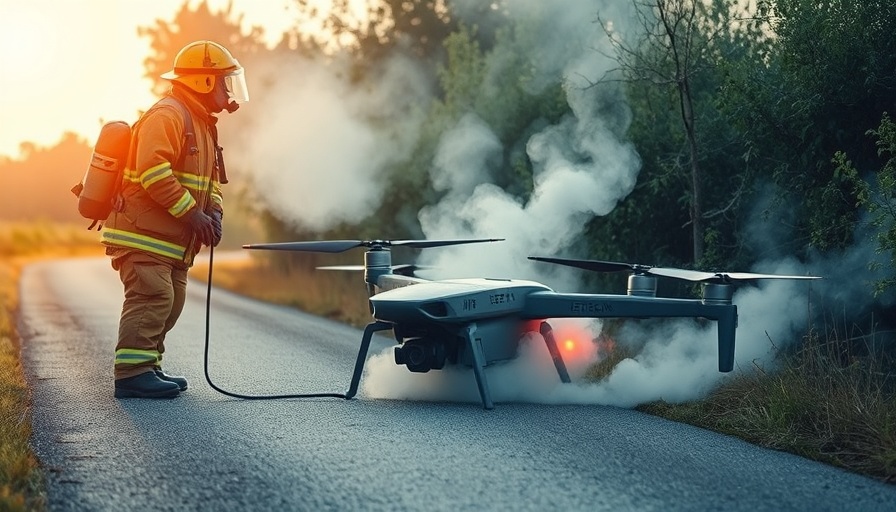
Firefighter inspecting crashed drone in UK border surveillance incident.

The Bizarre Incident of the Burning Drone

In a strange turn of events on a sunny afternoon, a UK border surveillance drone, specifically a Tekever AR5 Evolution MK2 worth approximately £450,000, was found ablaze on the roadside of a major motorway. Firefighters were summoned to the scene between Junction 13 for Folkestone and Junction 12 for Cheriton after reports of a vehicle fire. Upon arrival, however, they discovered that the vehicle was in fact a drone that had caught fire, rather than a car as initially believed.

Understanding the Drone's Role in Border Surveillance

This incident raises intriguing questions regarding the use of drones for national security. The Tekever AR5 Evolution MK2 is commonly deployed by the UK Home Office to monitor activities over the English Channel, particularly regarding illegal immigration and smuggling. These drones are equipped with advanced surveillance technology, providing real-time data and aerial footage crucial for border control operations.

What Happened? A Closer Look at the Incident

According to eyewitness accounts, the drone was seen with registration number ‘G-TEKE’. The drone, which had reportedly been transported in a vehicle, caught fire for reasons that remain under investigation. Kent Fire Services sent two fire engines to extinguish the flames using hose reel jets. No injuries were reported.

Firefighters' Response and Challenges

Given the growing prevalence of drone technology in various industries—from law enforcement to agriculture—emergency responders are increasingly faced with unique challenges when dealing with drone-related incidents. Safety protocols may not always be clear-cut, especially when handling machines that could be equipped with sensitive technology or hazardous materials.

Broader Implications for Drone Usage

This incident serves as a reminder of the vulnerabilities inherent in advanced technology. As drones become integrated into everyday operations, the importance of ensuring their reliability and safety increases. Questions about the durability of such technologies and their fail-safe mechanisms are relevant not only for military and law enforcement applications but also for commercial enterprises that cherish reliability.

Enhancing Drone Safety Standards

As drones revolutionize surveillance and logistics, it is crucial for government agencies and manufacturers to collaborate on establishing rigorous safety standards. This not only protects investments but also ensures public safety. With drones taking on more responsibilities, from disaster management to urban planning, their operational efficacy and safety must remain a priority.

Conclusion: What's Next for Drone Technology?

While the incident of the burning drone may appear insignificant at first glance, it represents a critical moment for the UK’s drone program and serves as a warning for the future. As the volley of modernization continues to shape global landscapes, it’s essential for those involved in drone technology to stay vigilant. Therefore, stakeholders across sectors must actively engage in conversations regarding safety, reliability, and the ethical implications of deploying drones, shaping a future where technology serves society’s best interests.

Drone Tech

15 Views

0 Comments

Write A Comment

*
*
Please complete the captcha to submit your comment.
Related Posts All Posts
05.14.2026

Misidentifying Drones: How a Simple Mistake Caused Airspace Chaos in Copenhagen

Update Mistaken Drone Reports Trigger National Security Panic On the evening of September 22, a simple observation turned into a national security headache for Denmark. It all started when an airport employee at Copenhagen Airport spotted two objects in the sky and jumped to a sensational conclusion: “There are two drones. They are large. It’s not toys,” she exclaimed. This swift assessment led to a protective closure of Danish airspace, a move that only allowed emergency landings. However, what she described as drones were far from it, raising concerns about how quickly misinformation can spiral out of control. Witness Testimony and the Illusion of Drone Activity The witness detailed the objects as resembling a large drone—a square shape about 1.5 by 1.5 meters—alongside a smaller, rapid-moving circular object. Despite her confident identification, she candidly admitted to never having seen a real drone in her life, explaining, “I have not seen any drones physically… but I explain from what I feel, and then it was a drone.” This gap in actual experience shows how assumptions can lead to chaotic situations, as her unchecked confidence transformed a nighttime observation into a high-stakes situation. Police Findings: The Truth Behind the Sighting In a matter of hours, an extensive investigation revealed a different reality. The police analysis determined that what the witness saw was merely a school training plane—a common aircraft operating in the area. The second object, thought to be a drone, turned out to be a lens flare artifact within the video footage. The officers’ thorough interviews and expert analyses uncovered the vital lesson: not everything seen in the sky is a drone. Creating a False Confirmation Loop This incident also highlights a key psychological phenomenon known as a false confirmation loop. As authorities rushed to investigate the reported drones, they dispatched a police helicopter for aerial reconnaissance. Those observing the helicopter incorrectly assumed it was another drone. This ripple effect of misidentification caused by escalating fears only compounded the original error, demonstrating how quickly misinformation can propagate and lead to unintended consequences. Challenges in Drone Regulation and Safety The repercussions of this incident resonate with broader concerns surrounding drone regulation. The Danish Military, for example, previously mistook a genuine aircraft for a drone, establishing a pattern that calls for better training and alertness concerning drone sightings. Given the rapid expansion of drone technology, the responsibility of accurately identifying aerial objects becomes more critical. It raises questions about readiness and response frameworks to manage airspace effectively. Lessons Learned: The Importance of Clear Communication This chaotic scenario underscores the need for better communication between personnel on the ground and in the air to prevent future mix-ups. Enhanced training programs for airport staff about drone technology—including what they actually look like—could mitigate the risk of panic-driven decisions that affect air traffic. Furthermore, the increased use of technology such as drone detection systems could aid authorities in distinguishing between actual drones and innocuous observations. In the end, this case serves as a reminder to remain cautious in our interpretations, especially when it comes to public safety and air regulations. Clear, vigilant communication and robust training are crucial to avoiding unnecessary risks in the face of emerging technologies. As drone technology continues to advance rapidly, stay informed and engaged with developments that could impact aviation and security systems around the world.

05.14.2026

The Arrest of Elon Musk's Russian Drone Counterpart: A Warning Sign for Industries

Update Unmasking Fraud in Russia's Drone AmbitionsThe arrest of Yury Kozarenko, the former CEO of Transport of the Future, marks a significant turning point in Russia's burgeoning drone industry. Once heralded for his bold promises to produce up to 300,000 UAVs annually for state military needs, Kozarenko now faces serious charges of fraud linked to a massive embezzlement scandal involving state defense contracts. This incident raises questions about the integrity of the drone production ecosystem in Russia and its implications for national security.A Promising Vision Turned SourKozarenko, who famously showcased his ambitious production plans to President Vladimir Putin in January 2025, has had his credibility severely tarnished. Following the receipt of a significant state subsidy of 4.5 billion rubles for the production of 750 vertical takeoff and landing drones, Kozarenko's firm is alleged to have failed to fulfill its contractual obligations, completing only 80% of the work. The investigation reveals a pattern where Kozarenko reportedly misappropriated around 70 million rubles meant for drone development by utilizing funds for nonexistent services from friendly organizations.The Dark Side of InnovationWhile Kozarenko's ambitions were initially lauded, they now echo a troubling narrative more common in the wartime economy. As the drone supply chain becomes increasingly complex, fraudulent activities and misrepresentation have surfaced, casting doubt on the quality and origin of Russia's drone technology. Allegations that Kozarenko's company might have passed off Chinese drones as homegrown products further complicates the integrity of the supply chain, raising concerns that counterfeit products could end up in military operations.Broader Implications for Russia's Drone StrategyThis scandal fits into a wider pattern of corruption being unearthed across Russia's military procurement systems. Notably, other key players are under investigation for similar misconduct, signaling widespread issues within the Russian defense sector. As the Kremlin emphasizes the need for domestic drone production to counter external threats, incidents like Kozarenko's arrest could jeopardize public trust and undermine strategic goals.What’s Next for the Russian Drone Industry?The future of the drone manufacturing initiative in Russia appears uncertain. With substantial investments on the line and growing scrutiny over the operations of companies like Transport of the Future, leadership must tread carefully. This incident may prompt a reevaluation of oversight measures within government contracts, particularly those involving pivotal military technologies.Conclusion: A Call for VigilanceAs Russia's aspirations in the drone arena hang in the balance, it's vital for stakeholders—ranging from tech enthusiasts to industry professionals—to remain vigilant about the unfolding implications of this high-profile case. Given the potential for technological innovations to impact global standing, understanding the dynamics of such fraud cases is crucial for anyone invested in the future of drone technology. The fallout from Kozarenko's arrest serves as a cautionary tale highlighting the intersection of ambition, accountability, and the need for transparent governance in emerging industries.

05.14.2026

How Wright’s Law Can Propel U.S. Drone Industry Growth and Innovation

Update Harnessing Wright’s Law for Drone Innovation As the United States seeks to enhance its drone industry, the intersection of industrial policy and Wright’s Law provides a promising framework for innovation. Wright's Law asserts that as production volume increases, the cost of each unit decreases, facilitating improvements in technology through economies of scale. Recent developments from both government initiatives and private sector innovations highlight the urgency of this approach. The U.S. government's executive orders aim to bolster domestic production of drones, ensuring American manufacturers remain competitive on the global stage. Increased demand for drone applications—from logistics to public safety—could ignite a production surge, allowing domestic firms to capitalize on Wright's Law. The Role of Government in Accelerating Drone Production The U.S. administration's robust commitment to nurturing the drone sector presents a unique opportunity for domestic manufacturers. Recent executive orders have mandated the integration of unmanned aircraft systems (UAS) into the national airspace, which is essential for facilitating the growth of this industry. Moreover, the establishment of pilot programs aimed at enhancing eVTOL (electric Vertical Takeoff and Landing) capabilities showcases the government's ambition to lead in advanced air mobility. These initiatives not only seek to simplify the regulatory framework but also to stimulate demand, fostering an environment where Wright's Law can take effect. Technological Advancements and the Future of Drones The technological innovations that underpin the future of drones are vast. From artificial intelligence to improved battery technologies, advancements are fueling the potential of UAS across various sectors. For instance, companies like Skydio are paving the way for cutting-edge drone capabilities, demonstrating that American ingenuity can thrive with the right support and incentives. As the demand for drones in agriculture, infrastructure, and emergency services escalates, investment in these technologies will be crucial. The simultaneous push for greater efficiency and lower production costs aligns perfectly with the principles of Wright’s Law, promising a future where U.S. drone manufacturers can dominate both domestic and international markets. Challenges Facing the U.S. Drone Industry While the potential for growth is immense, the U.S. drone industry faces significant hurdles. Competition with foreign manufacturers remains a concern. Countries with lower labor costs and established supply chains pose a threat to American drone producers as they strive to scale up their operations. Furthermore, regulatory obstacles can hinder the integration of advanced technologies. Addressing these challenges will require a concerted effort from both the government and industry stakeholders to ensure that the U.S. can maintain its leadership in drone technology. The Path Forward: Strategic Insights for Stakeholders For industry professionals and tech enthusiasts alike, understanding the implications of these policies is vital. The melding of government efforts with private sector innovation underlines the importance of collaboration. By fostering partnerships, stakeholders can leverage each other’s strengths to accelerate the adoption and commercialization of drone technologies. As production ramps up and new applications emerge, the key will be to navigate the evolving regulatory landscape. Emphasis on initiatives that prioritize U.S.-manufactured drones will not only strengthen economic resilience but also lead to the creation of high-skilled jobs that can sustain American leadership in this dynamic sector. In this transformative era for drone technology, engagement with evolving policies and an understanding of Wright's Law will empower industry professionals to capitalize on forthcoming opportunities, ensuring that the U.S. drone industry remains at the forefront.

Terms of Service

Privacy Policy

Core Modal Title

Sorry, no results found

You Might Find These Articles Interesting

T
Please Check Your Email
We Will Be Following Up Shortly
*
*
*