
cropper
Drone Central Station
  • Home
  • Categories
    • Drone Tech
    • Drone Applications
    • Drone Racing
    • Accessories
    • Real Estate
    • Military
    • Disaster
    • Drone Footage
    • Product Reviews
    • Business Profiles
August 05.2025
2 Minutes Read

Shield AI’s V-BAT Achieves Operational Success with the U.S. Coast Guard

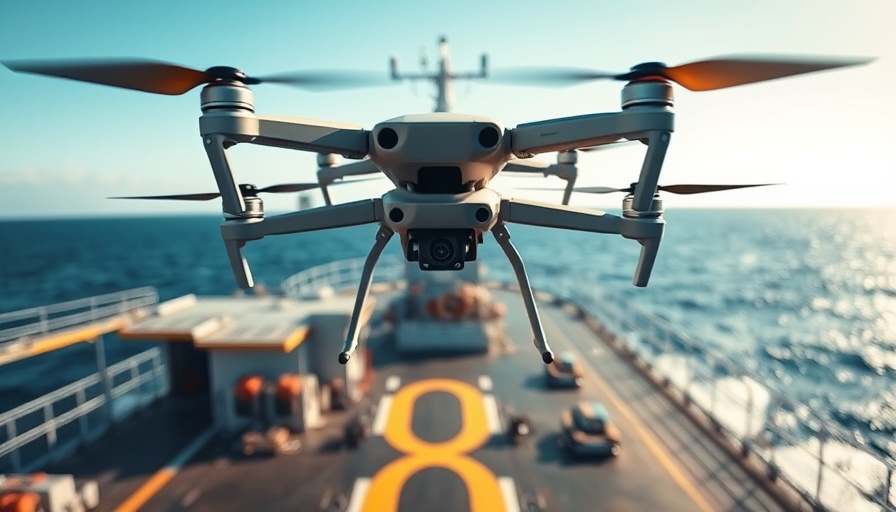
V-BAT Operational Evaluation with drone over ship deck.

V-BAT: A New Milestone in Maritime Operations

In an era where technological advancements redefine military and maritime operations, Shield AI’s V-BAT unmanned aircraft system (UAS) stands out as a testament to innovation. Recently, the V-BAT 5.3 achieved a significant milestone by passing Operational Test & Evaluation (OT&E) with the U.S. Coast Guard, scoring 100% on all key performance metrics during four days of rigorous flight testing.

Transforming Military Efficiency

The successful operational testing aboard the Coast Guard Cutter Midgett not only signifies that the UAS meets the stringent requirements set before it but also marks the beginning of a new chapter in unmanned maritime operations. As pointed out by Brandon Tseng, President of Shield AI, the integration of V-BAT reflects a shift in maritime strategies under the Force Design 2028 initiative. This initiative aims to reshape how operations are conducted on the sea, enhancing efficiency and effectiveness.

Significance of the $198 Million Contract

The contract awarded in June 2024, valued at $198 million, is set to deliver Intelligence, Surveillance, and Reconnaissance (ISR) services using the V-BAT platform. Such a financial commitment highlights the U.S. Coast Guard's trust in the capabilities of this technology and its anticipated role in bolstering national security.

What Makes the V-BAT Unique?

What distinguishes the V-BAT from other UAS technologies is its design and operational capacity. Its single-engine, ducted-fan VTOL design allows it to launch and recover autonomously, a feature that reduces the need for personnel deployment. This capability is critical not only for military operations but also for coastal surveillance, search and rescue missions, and environmental monitoring. This versatility positions the V-BAT not just as a military asset, but as a functional tool for various maritime operations.

Future Possibilities with Unmanned Systems

As the V-BAT transitions into regular operations, it paves the way for the future of unmanned systems in maritime operations. The technology has the potential to extend beyond military use, influencing commercial maritime operations, disaster response, and environmental monitoring. This transition to unmanned systems promises not only to enhance operational capabilities but also to inspire new methodologies in how these operations are envisioned and executed.

Conclusion

The V-BAT’s impressive results in operational evaluation indicate that unmanned systems are set to revolutionize maritime operations. The resonance of this technology's success should be a call to action for industry professionals and enthusiasts alike to explore the broader implications of drone technology on various sectors. With its enhanced capabilities, the V-BAT serves as an emblem of what the future holds for unmanned aerial systems.

Drone Tech

29 Views

0 Comments

Write A Comment

*
*
Please complete the captcha to submit your comment.
Related Posts All Posts
09.05.2026

The Leipzig Explosive Drone Incident: Why Visual Proof Is Essential

Update Understanding the Leipzig Drone Incident: A Call for TransparencyThe recent Leipzig explosive drone incident has sparked widespread attention and concern, especially given the implications for national security and public safety. The incident, where a drone reportedly containing explosives was found at Leipzig/Halle Airport, raises significant questions regarding the transparency of law enforcement and investigative agencies in handling drone-related threats. With the German government pointing fingers at Russia, the demand for clear photographic evidence has become louder.Why Visual Evidence MattersThe request for clear photos of the drone is not just about revealing a device; it’s fundamentally about restoring trust. In past incidents involving drones, such as the chaotic Gatwick drone sighting in December 2018 which turned out to be nothing more than a child’s toy, the lack of reliable visuals has led to public skepticism regarding authorities’ competence in managing drone threats. In March 2025, at Zaventem Airport, misleading information and a police helicopter misidentified as a drone left many questioning the integrity of official communications.Lessons from Previous Drone IncidentsHistorically, drone incidents have been marred by misidentifications and questionable evidence. For instance, in Denmark, armed forces mistakenly fired on what they perceived to be a drone, later found to be a passenger aircraft. Each of these incidents has demonstrated that officials may sometimes obscure the truth when convenient, with evidence published to strengthen narratives rather than confirm facts. The公众 response necessitates a shift toward demanding verified information, especially in high-stakes situations.The Impact of MisinformationAs technology advances, so does the potential for misinformation in reporting drone incidents. These inaccuracies not only erode public trust but pose risks to the effective response to genuine threats. By calling for transparency in the Leipzig incident, we can begin to differentiate between credible threats and avoidable panic. Organizations and governments must recognize that the modern technological landscape demands a correspondingly transparent and accountable approach.Future Considerations: The Role of Technology in Public SafetyThe Leipzig case underscores a pivotal moment where technology and public safety intersect. With drones becoming increasingly central in discussions around security and warfare, the demand for substantiated visual evidence cannot be overstated. As drones proliferate, the capacity to deploy them in varying capacities—from recreational to military—will only expand, escalating the need for rigorous oversight and verification processes.What Can Be Done?This call for transparency is not only about Leipzig; it extends to how drone incidents will be managed moving forward. Proactive measures, such as clearly documenting drone specifications, transparency in communications, and public engagement in the processes are critical to maintaining public trust. Engaging with the communities and technology experts can facilitate a dialogue that addresses concerns while promoting understanding.If we care about maintaining a safe and informed society, transparency is paramount. We urge authorities to provide clarity and build bridges with the public to ensure constructive discourse about drone incidents in the future.

09.05.2026

98.6% of Comments Oppose FCC's Military-Grade Drone Proposal: A Call for Change

Update Public Outcry Against FCC's Drone Proposal The Federal Communications Commission (FCC) has recently faced a storm of opposition against its proposal aimed at restricting the import and sale of certain foreign-produced drones. An analysis conducted by Pilot Institute highlights an overwhelming critique, revealing that 98.6% of respondents who submitted public comments were against the proposal. This data, based on a review of 3,824 filings, underscores growing concerns within the drone community about economic ramifications, public safety, as well as implications for agricultural and commercial operations. Concerns Echoed by Diverse Stakeholders Comments submitted to the FCC paint a clear picture of the proposal's potential impact. Greg Reverdiau, co-founder of Pilot Institute, emphasizes that the opposition comes from a wide array of groups, including small business operators and public safety agencies. "The record is damning: small businesses say they will close, public safety agencies say lives will be lost, and the agriculture sector says this will hit crops and yield," Reverdiau stated, illustrating the variety of stakeholders impacted by this decision. The Proposal’s Implications for the Drone Market The controversial proposal, unveiled in July, seeks to categorize certain drones as “military-grade” based on defined specifications—attributes like thermal imaging capabilities, weight thresholds, and integration of defense articles. As such, it aims to limit the importation and marketing of these drones, raising serious concerns in industries reliant on drone technology for operational efficiency and data collection. Industry Reactions and Future Trends The response from key industry players has been largely negative, with corporate giants like DJI filing lengthy comments to express their apprehensions. The company has pointed out that labeling their products under these restrictive categories could stifle innovation and limit market access. DJI's concerns are emblematic of the broader fears within the industry regarding maintaining competitiveness and fostering advancements in drone technology. Potential Economic Impacts Revealed The FCC initially suggested that the economic impact of the proposal would be minor. However, the comments submitted during the public review process starkly contradict this notion. Most commenters provided evidence of the adverse effects that could extend beyond the immediate operators to affect the entire supply chain. For instance, farmers depend on drones for precision agriculture, and any limitations imposed could lead to reduced crop yields, ultimately affecting food supply and prices. The Call for a More Considered Approach Industry advocates are now calling for the FCC to reconsider its proposal and take the public’s feedback seriously. They argue that an extended comment period is necessary to allow a broader segment of the drone ecosystem to voice their opinions and share data supporting their stance. This outreach is crucial not only for the stakeholders directly affected but also for a technology sector that is still evolving and holds the potential for significant societal advances. Final Thoughts: Why This Matters The overwhelming opposition to the FCC proposal underscores a profound concern about the balance between regulation and innovation in industries reliant on drone technology. As drone usage expands across agriculture, public safety, and commercial applications, regulatory measures must evolve without stifling the benefits that this technology can bring. As we move forward, it's vital for stakeholders to remain engaged in these discussions, ensuring that their voices are heard and that legislation aligns with the realities of the industry. As this debate unfolds, we encourage readers to stay informed and advocate for a regulatory environment that fosters growth and innovation while prioritizing safety and public interest.

09.05.2026

The Open Platform Strategy: A New Era for U.S. Drone Innovation

Update Drones Adapting to Market Changes: The Open Platform Strategy The U.S. drone market is undergoing significant transformation as consumer needs and regulatory pressures evolve. Companies like Inspired Flight are rising to the occasion with innovative strategies that emphasize flexibility and responsiveness. Their open platform approach is not only reshaping product development but is setting a new standard for adaptability in the drone industry. Understanding the Open Platform: A Game-Changer for Drone Technology The open platform strategy allows various software developers to create compatible applications for drones, enhancing their functionality. This approach not only promotes innovation but also encourages collaboration among different tech experts and companies. As highlighted in a recent interview with Inspired Flight, this flexibility is essential in catering to varied market demands—from recreational hobbyists to military applications. The Benefits of an Open-Source Ecosystem in Drone Applications Adopting an open-source platform fosters a community approach in drone technology. Developers can contribute to and build on existing systems, creating faster progress in both functionality and usability. This shift is particularly advantageous for niche markets like emergency services and search-and-rescue operations, where tailored solutions can be rapidly developed and deployed. Market Trends Influencing the Future of Drone Development Current trends suggest that the drone market will focus increasingly on sustainability and environmental impact. As companies navigate legislative frameworks concerning airspace and usage regulations, the importance of innovation will rise. Inspired Flight's open platform not only meets the demand for diversity in application but also aligns with growing consumer expectations for eco-friendly technologies. Expert Insights: Navigating Challenges and Opportunities Industry experts like those from Inspired Flight emphasize the need for robust strategies to address both competitive challenges and potential regulatory hurdles. Collaborative frameworks that come from open platforms are seen as pivotal in leveraging technology for future advancements. By bringing together developers, manufacturers, and users, the path to innovation becomes clearer and more accessible. The Community Aspect: Building a Network of Innovators Community engagement is vital to the success of an open platform strategy. Inspired Flight aims to create connections between developers and users, allowing knowledge exchange that benefits all parties. From enhancing designs to real-world testing, the collaborative ethos cultivates not just a product but a culture of innovation. For drone enthusiasts, this means more robust and versatile products that push the boundaries of what is possible. The open platform strategy puts the U.S. drone market on a growth trajectory driven by innovation and collaboration. As enthusiasts and professionals alike engage with this model, the potential for groundbreaking advancements in drone technology continues to expand, promising exciting developments ahead.

Drone Central Station

Drone Central Station is your HQ for all things drone. Keep up-to-date with advances in drone tech, drone usage, and new products. Get tips, product reviews, and more.

  • Drone Central Station

COMPANY

  • Privacy Policy
  • Terms of Use
  • Advertise
  • Contact Us
  • Menu 5
  • Menu 6

(510) 393-8174

AVAILABLE FROM 8AM - 5PM

City, State

, Oakland, CA

ABOUT US

Drone Central Station is your HQ for all things drone. Keep up-to-date with advances in drone tech, drone usage, and new products. Get tips, product reviews, and more.

© 2026 CompanyName All Rights Reserved. Address . Contact Us . Terms of Service . Privacy Policy

Terms of Service

Privacy Policy

Core Modal Title

Sorry, no results found

You Might Find These Articles Interesting

T
Please Check Your Email
We Will Be Following Up Shortly
*
*
*