
Add Row
Add Element
cropper
update
Drone Central Station
update
Add Element
  • Home
  • Categories
    • Drone Tech
    • Drone Applications
    • Drone Racing
    • Accessories
    • Real Estate
    • Military
    • Disaster
    • Drone Footage
    • Product Reviews
    • Business Profiles
August 28.2025
3 Minutes Read

Michigan's Drone Delivery Tests: A Peek into Advanced Aerial Mobility's Future

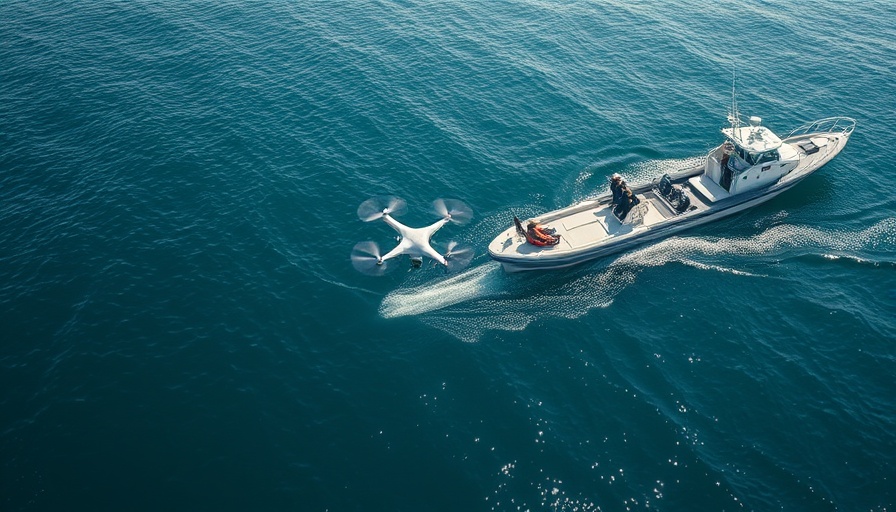
Drone delivery of medical supplies and auto parts over patrol boat in open water.

Exploring the Future of Advanced Aerial Mobility in Michigan

In an exciting development for the evolving sector of Advanced Aerial Mobility (AAM), Michigan is stepping up to the plate with a substantial investment of $4.1 million to boost the testing and development of drone technology. This initiative aims to harness Michigan's rich automotive infrastructure to pave the way for a new era in logistics and transportation through unmanned aerial vehicles (UAVs). With a focus on moving essential materials, including auto parts and medical supplies, the state positions itself as a potential leader in this burgeoning industry.

Transforming Logistics: Drones for Auto Parts Delivery

One prominent project involves Jack Demmer Automotive, a local car dealership group that will pilot using drones to transport high-demand auto parts. This innovation not only supports the dealership’s functionality but also enhances the overall efficiency of the supply chain within the automotive sector. With a history steeped in automobile production and innovation, Michigan is uniquely situated to exploit drone technology effectively. The shift to automated deliveries aligns with the state’s ongoing commitment to remain at the forefront of automotive advancements.

Enhancing Healthcare with Drone Deliveries

The future of healthcare logistics is also set to transform through drone use. Munson Healthcare in Traverse City is preparing to test drone deliveries for critical items such as pharmaceuticals and lab samples. This project underscores the healthcare sector's potential to improve operational efficiencies, ultimately benefiting patient care. As noted by Charlie Tyson, the technology activation director, integrating advanced drone solutions can significantly expedite deliveries, ensuring timely access to medical supplies where they are most needed.

CVS's Groundbreaking Pilot Project

Drugstore giant CVS plans to take advantage of Michigan’s grants to initiate its first-ever pilot project using drones to transport pharmaceuticals within the southeast region. This pilot aims to streamline the logistics from warehouse to store, enhancing customer access to vital medications. As CVS enters this new phase of logistics, its experiences can provide valuable insights for the broader retail industry, illustrating how drones can help overcome challenges associated with traditional supply chain systems.

Establishing Safe Air Corridors for Drones

Safety is crucial when it comes to implementing drone technology. All projects will utilize established "skyways" to ensure safe operating terrain for the drones, significantly reducing the risks of collisions. Advanced air traffic management software will guide the flight paths, steering clear of populated areas and traditional air traffic, thereby ensuring the safe integration of these aerial vehicles into the crowded skies.

A Vision for a Connected Future

The University of Michigan is also contributing significantly to the AAM landscape through its "M-Air" initiative, which seeks to expand the current vehicle testing site, MCity, into a dedicated air corridor connecting Detroit and Ann Arbor. This corridor will foster innovation, testing, and deployment of UAV technology. The strategic development of such hubs is vital for pushing the boundaries of what’s technologically possible, ensuring that Michigan remains a leader in this space.

Looking Ahead: What’s Next for Advanced Aerial Mobility?

While AAM primarily focuses on goods at this juncture, the technology holds the promise of evolving to transport people in the future. This remains a distant possibility, but it emphasizes the transformative potential of unmanned vehicles across various sectors. The successful integration of drones into logistics could herald a new age of mobility that transcends current limitations.

As Michigan embarks on this adventurous journey into AAM, the potential impact on industries and everyday life could be monumental. The state’s commitment to fostering drone technology not only supports local businesses but also positions Michigan as a visionary leader in the rapidly evolving world of aerial mobility.

Drone Applications

11 Views

0 Comments

Write A Comment

*
*
Please complete the captcha to submit your comment.
Related Posts All Posts
04.18.2026

Navigating Drone Regulations: Can Parks Ban Your Aerial Adventure?

Update The Confusion of Airspace Regulations and Local Laws In the realm of drone flying, many enthusiasts are often caught in the crossfire of federal oversight and local governance. Recently, questions have arisen about whether parks can impose bans or restrictions on drone activity. The Federal Aviation Administration (FAA) holds the reins over navigable airspace in the United States, which complicates matters when local counties decide to establish their own rules regarding drone operation.In Can Parks Ban You From Flying a Drone Over Them?, the discussion dives into the intricate balance between FAA authority and local regulations, prompting us to break down the key insights for drone operators. Understanding FAA Authority and Local Governance The FAA is charged with managing the airspaces, which means they dictate the altitude and general flying regulations for all aircraft, including drones. However, local governments have control over the land they manage. This distinction allows counties to set rules regarding drone activity on their properties, focusing on activities like takeoff and landing rather than the flight path itself. If a park declares, 'no drones allowed,' it's primarily trying to prevent users from launching or landing their devices within their boundaries. The Gray Area of Airspace Use: What You Need to Know The line becomes blurrier when you consider launching a drone from outside park boundaries. For example, if you take off from a nearby sidewalk or private property, you're likely operating within the law per FAA regulations, even if your drone flies over the park. This legal gray area often leads to confusion; drone operators can comply with federal regulations but still face local citations or disputes with park authorities. Hence, staying informed about both federal and local rules is crucial. Planning Your Drone Flight: Essential Steps For those eager to capture stunning aerial views near parks, it’s recommended to adopt a proactive approach. Always check local ordinances and park websites for any drone regulations before planning your flight. Consider reaching out directly to the park management—asking for permission or exploring the possibility of a permit could save you time, energy, and possible legal trouble. Actionable Tips for Drone Enthusiasts To navigate the complexities of drone operation near parks, here are some tips: Research Local Regulations: Before flying, consult local ordinances to ensure no conflicts with existing laws. Check Park Websites: Many parks list their drone policy plainly, which can save you from unwanted surprises. Contact Authorities: If in doubt, don’t hesitate to ask park officials about their drone policies to gain clarity. Understanding the nuances of drone flying, especially over parks, is essential for any operator looking to stay compliant. As mentioned in the video Can Parks Ban You From Flying a Drone Over Them?, local governments have authority over land use but must align with FAA regulations governing airspace. This vital distinction needs careful navigation, ensuring safe and responsible drone operation while respecting local laws.

04.17.2026

Matternet and SoftBank Robotics America Join Forces to Transform Drone Delivery Networks

Update Exploring the Future of Drone Delivery in Healthcare and Logistics The partnership between Matternet and SoftBank Robotics America signifies a crucial shift in the landscape of delivery logistics, focusing particularly on healthcare and enterprise operations. As urban congestion, labor shortages, and rising costs threaten traditional last-mile delivery services, the introduction of drone delivery systems presents an innovative solution that aims to streamline operations while meeting the increasing customer demand for speed and reliability. Rising Demand for Efficient Delivery Solutions Last-mile delivery has become a bottleneck in the logistics chain, with slow turnaround times leading to frustrated customers. According to recent reports, companies like Advocate Health are stepping in to tackle these challenges. They plan to implement the largest hospital-based drone delivery network in the U.S., aimed at improving the accessibility of medications and medical supplies in underserved areas. The integration of drone delivery is expected to not only reduce delivery times but also enhance diagnostic processes by facilitating swift movement of lab samples, thus revolutionizing how healthcare providers serve their patients. The Shift from Development to Real-World Application Both Matternet and SoftBank emphasize the transition from developmental technologies to operational frameworks. Matternet’s CEO, Andreas Raptopoulos, states that their partnership with SoftBank is pivotal in establishing autonomous networks that will transform the logistics landscape. This sentiment resonates across the industry, as companies prioritize scalable, measurable solutions over mere technological advancements. The talk isn’t just about creating drones; it’s about effectively operationalizing them for everyday logistics challenges. Regulatory Milestones and Future Prospects Matternet enters this collaboration backed by significant regulatory achievements, including FAA Type Certification, paving the way for extensive commercial drone flights across the U.S. and Europe. These milestones signal readiness for broader deployment. Innovations in drone technology are now shifting focus from testing phases to scalable operations, which bodes well for industries reliant on efficient logistics structures. Highlighting the Economic and Operational Benefits The potential cost savings associated with drone delivery are substantial. For instance, Blueflite’s operations within Michigan have demonstrated how drone logistics can significantly lower transportation costs while expediting delivery times. Tracy Cleveland, Vice President of Supply Chain at Munson Healthcare, highlighted the operational efficiencies that drones could bring, stating that current road transport practices are both slow and costly. Introducing drones can lead to safer and more efficient systems that ultimately improve patient outcomes. Looking Ahead: Implications for Industry Professionals As this partnership unfolds, industry professionals and tech enthusiasts should keep an eye on how these drone delivery systems evolve. From enhancing supply chains to revolutionizing emergency healthcare response, the implications are profound. Understanding the operational capabilities of drones can open doors for innovative solutions in various sectors. As Matternet and SoftBank work towards establishing robust drone networks, the potential for improving delivery logistics could serve as a model for future advancements in the tech landscape. For tech enthusiasts and industry professionals alike, staying informed about these developments is essential. The landscape of drone delivery is rapidly changing, and opportunities exist for those who adapt to and embrace new technologies.

04.16.2026

Donecle's €10 Million Boost: Revolutionizing Drone-Based Aircraft Inspection

Update Donecle Secures €10 Million for Drone Technology Expansion Donecle, a prominent player in the drone inspection industry, has successfully raised €10 million in funding aimed at expanding its innovative drone-based aircraft inspection platform. This technology is designed not only to enhance the efficiency of aircraft inspections but also to significantly reduce turnaround times – a critical factor for airlines and maintenance providers. The Growing Demand for Drone-Based Inspections The global aerospace industry is increasingly recognizing the value of integrating drone technology into their operational processes. The demand for quicker and more efficient inspections is skyrocketing, driven by stricter regulatory requirements and a need for safety. Donecle’s platform leverages advanced imaging technology and artificial intelligence to inspect aircraft surfaces and identify potential issues. This allows for comprehensive analysis with pinpoint accuracy, ensuring that safety standards are upheld while minimizing service disruption. How Donecle's Technology Works Donecle’s unique approach utilizes autonomous drones fitted with high-resolution cameras to carry out detailed inspections. The captured data is processed through machine learning algorithms, allowing the system to not only detect flaws but also learn and adapt over time for better accuracy in future inspections. This approach offers a forward-thinking solution to the traditional manual inspection methods, which often rely on human inspection teams that can be time-consuming and error-prone. A Bright Future with Funding Boost The recent funding will allow Donecle to further develop their platform and increase their market presence. This cash injection is pivotal for enhancing R&D efforts, expanding their operational capabilities globally, and potentially increasing their workforce. Investors see the growing trend toward automation and efficiency, positioning Donecle as a frontrunner in an evolving market. Implications for the Industry Donecle’s advancements represent not just a technological leap but also a significant shift in how safety and maintenance protocols will be executed in aviation. Shorter inspection periods translate into less downtime for aircraft, thereby enhancing the profitability for airlines and ensuring that passenger safety remains paramount. The integration of drones into aviation maintenance may set new benchmarks for efficiency and reliability across the industry. Why This Matters to Tech Enthusiasts The growth of drone technology and its application in industries like aviation signals a broader trend towards automation and the digital transformation of traditional industries. For tech enthusiasts and industry professionals, this not only represents an exciting time for innovation but also serves as a testament to the potential impacts of technology on safety and efficiency. As companies like Donecle continue to innovate, they pave the way for the future of industry standards. Conclusion As Donecle strides toward a future where drone inspections become the norm, industry stakeholders, from airlines to maintenance providers, should take note. The implications of this technology go beyond cost savings and efficiency; they touch upon the core of operational safety and regulatory compliance. As we watch this space unfold, one can expect that the integration of drones into sectors like aviation will continue to grow, ushering in a new era of innovation.

Terms of Service

Privacy Policy

Core Modal Title

Sorry, no results found

You Might Find These Articles Interesting

T
Please Check Your Email
We Will Be Following Up Shortly
*
*
*