
Add Row
Add Element
cropper
update
Drone Central Station
update
Add Element
  • Home
  • Categories
    • Drone Tech
    • Drone Applications
    • Drone Racing
    • Accessories
    • Real Estate
    • Military
    • Disaster
    • Drone Footage
    • Product Reviews
    • Business Profiles
August 22.2025
3 Minutes Read

Lockheed Martin's Groundbreaking Black Hawk Modernization Revolutionizes Military Aviation

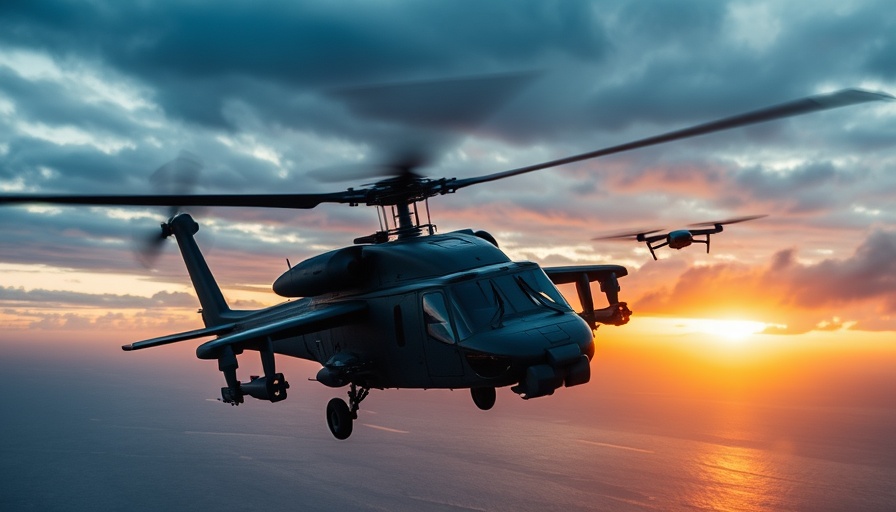
Modernized Black Hawk helicopter and drones flying at sunset

A New Era for the Black Hawk: Lockheed Martin Takes Charge

In a significant advancement for military aviation, Sikorsky, a subsidiary of Lockheed Martin, has been awarded a $43 million contract by the U.S. Army aimed at modernizing the iconic Black Hawk helicopter. This initiative is part of a broader strategy to enhance the aircraft's capabilities, particularly in integrating unmanned aerial systems (UAS) and other advanced technologies, making it a more formidable asset in military operations.

Transforming the Black Hawk with a Digital Backbone

The modernization strategies outlined in the contract are set to leverage model-based systems engineering (MBSE) to create a digital thread that improves design, testing, and maintenance efficiencies. The introduction of a digital backbone is pivotal; it supports a Modular Open System Approach (MOSA), setting the stage for rapid adaptations to meet evolving mission requirements. Such enhancements not only promise improved performance but also the integration of critical technologies like AI and autonomy, which are essential for tomorrow's battlefield.

Strategic Advantages in Military Operations

"Sikorsky is ready to implement new technologies that will strengthen the combat-proven Black Hawk helicopter," stated Hamid Salim, Vice President of Army and Air Force Systems at Sikorsky. The ability to deploy UAS alongside upgraded aerial capabilities could dramatically enhance the effectiveness of Army missions in regions such as the Indo-Pacific, where operational versatility is crucial. By equipping the Black Hawk with launched effects, ground forces can gain strategic advantages in reconnaissance and tactical responses.

Field-Ready Innovations for Immediate Impact

As Sikorsky continues to innovate, it is already deploying enhancements that improve current Black Hawks. The introduction of upturned exhaust systems II kits translates to better infrared suppression and weight reduction, along with improved reliability and maintainability. These advancements showcase Sikorsky's commitment to delivering not just future-ready helicopters but also enhancing existing fleet capability.

The Bigger Picture: Military Preparedness and Innovation

The Black Hawk modernization efforts come at a time when military forces worldwide are re-evaluating their technological approaches amidst rapidly changing global threats. As the U.S. Army focuses on integrating new technologies into its operations, the strategic importance of maintaining a robust and versatile helicopter fleet becomes evident. This infusion of modern technology ensures that the Black Hawk continues to be a critical component in U.S. defense strategies for years to come.

Looking Ahead: What This Means for the Future

The future of military aviation resides in the blend of traditional helicopter capabilities and cutting-edge technology. The Black Hawk modernization initiative not only revitalizes an established aircraft but also sets a precedent for future military aviation projects. As these technologies are successfully integrated, they promise to change the dynamics of air support in combat scenarios, making missions safer and more effective for soldiers on the ground.

As Sikorsky works hand-in-hand with suppliers and military leaders, the vision of a modernized Black Hawk becomes clearer—offering enhanced capabilities, improved safety, and extending the operational lifespan of one of the military's most beloved helicopters.

Military

40 Views

0 Comments

Write A Comment

*
*
Please complete the captcha to submit your comment.
Related Posts All Posts
04.19.2026

Exploring the RAF's Role in Counter-Uncrewed Aerial Systems

Update Understanding the RAF's Counter-Drone Strategy The growing prevalence of uncrewed aerial systems (UAS), commonly known as drones, has introduced unique challenges to defense forces worldwide. In the UK, the Royal Air Force (RAF) is leading the charge in counteracting this evolving threat through the establishment of the No. 2 Counter-Uncrewed Aerial Systems Wing. This initiative not only highlights the RAF’s adaptive strategies but also underscores the importance of multi-layered defense approaches in modern warfare. A Historical Perspective on Air Defense The RAF Regiment has a storied history in air defense dating back to its founding in 1951, when it played crucial roles during significant military crises, such as the Suez Canal Crisis. Over the decades, the regiment's capabilities have evolved from traditional ground-based defenses to advanced counter-drone systems. This transformation reflects broader trends within the military landscape where threats are no longer limited to conventional warfare but now include sophisticated and decentralized operations such as drone warfare. The Evolving Nature of Drone Threats Recent conflicts have demonstrated the tactical advantages drones provide in surveillance and aggressive maneuvers. As Air Commodore Paul Hamilton of the RAF Regiment noted, the “drone activity is now a routine feature” of the modern battlefield. Protective measures must adapt rapidly to address this instantaneous threat, which is marked by its low cost and high availability in various forms. Technological Components of Counter-Drone Operations The No. 2 Counter-Uncrewed Aerial Systems Wing employs a comprehensive array of technologies designed to detect, disrupt, and defeat rogue drones: ORCUS: This system utilizes integrated radar and radio frequency technology to sense drone activity and relay vital targeting information. NINJA: An innovative advancement, NINJA allows operators to hijack hostile drones, landing them safely for analysis—a significant shift in counter-drone operations. Rapid Sentry: When softer electronic measures fail, Rapid Sentry provides a kinetic response with high-speed missiles capable of neutralizing fast-moving aerial threats. The synergy among these systems forms a robust defense framework to protect airbases, vital infrastructures, and personnel. Counteracting the Evolving Threat Landscape To remain effective, RAF's counter-drone strategies must not only evolve with technology but also through collaboration. As noted in recent deployments across the Middle East, RAF teams work closely with coalition forces, such as the US and British Army, ensuring an integrated approach to aerial safety. This interoperability is crucial, especially given the rapid pace at which drone technology and tactics are developing. Implications for Military Engagements The implications for military and defense strategies are profound. As modern conflicts increasingly involve asymmetric warfare tactics—including the utilization of drones—defense forces must be prepared to deploy sophisticated technologies that can operate within shared response frameworks across allied nations. This prioritization of collaboration ensures timely and effective action against threats, minimizing risks to life and equipment. The emergence of the No. 2 Counter-Uncrewed Aerial Systems Wing represents a significant development in the RAF's commitment to addressing contemporary challenges in military defense. As drone technology continues to advance, the proactive steps taken by this unit highlight the need for constant learning and adaptation in the face of emerging threats. Call to Action: Stay Informed about Drone Technologies In this rapidly evolving technological landscape, staying informed about advancements in drone capabilities and countermeasures is crucial for industry professionals and tech enthusiasts. Follow developments in military technology to better understand their implications for security and defense strategies globally.

04.17.2026

Belgium’s €50m Drone Panic: A Closer Look at Defense Procurement Issues

Update The Unfolding €50m Drone Panic: A Critical Investigation On April 17, 2026, the Belgian public prosecutor initiated an investigation into the ministry of defense's controversial procurement of €50 million worth of anti-drone technology. This inquiry was prompted by an investigative film by Pano, which scrutinized alarming drone sightings across Belgium from September 2025 to January 2026. Belgian authorities received an astonishing 558 reports of suspicious drone activities, leading to heightened security measures at critical infrastructures like Brussels and Liège airports. Debunking the Drone Threat Narrative The man at the center of this escalating crisis, Belgian Defense Minister Theo Francken, initially suggested that these drone sightings were linked to Russian espionage attempts. However, a revelation from the Pano documentary uncovered no substantiated evidence linking any state-sponsored drones to the incursions. In one notable incident, a large aerial object that raised alarms turned out to be a police helicopter—an embarrassing detail that has not helped defuse public anxiety. With growing tension and potential for panic among the populace, Francken fast-tracked the procurement of detection and jamming systems to mitigate what he portrayed as a significant national security threat. Financial Oversights and Historical Parallels The financial ramifications of this hurried procurement are troubling. Much like the infamous Agusta scandal of the late 1980s, where massive bribes were paid for military contracts, this recent incident raises concerning questions about governance and oversight in the defense sector. Critical financial advice was allegedly disregarded during the procurement process, with equipment purchased at inflated prices without competitive bidding. This stark reflection of misuse of public funds invites scrutiny akin to that previously faced during the Agusta-Dassault affair, which significantly impacted Belgian politics, leading to resignations of senior officials and severe changes to party financing laws. Calls for Transparency and Accountability Despite the gravity of the situation, Francken expressed approval of the investigation, highlighting his hope that it would clarify any notions of impropriety. He has called for a concurrent internal audit to address these procurement concerns. However, political opponents like Conner Rousseau, of the Vooruit party, emphasize the damaging narrative surrounding governmental incompetence. Rousseau advocates for transparency, reminding those in power about the psychological impact instilled in a populace already anxious about global instability. The Wider Context: Parliamentary Governance and Institutional Integrity This incident forms part of a broader pattern of institutional challenges that Belgian governance is grappling with. Recent months have seen a clamor over public procurement rules after a case involving Bpost, where the company was part of a newspaper distribution procurement scandal. The ruling indicated a troubling willingness among companies to engage in collusion, raising alarms about competitiveness within public contracts. This environment adds further pressure on the current investigation into the defense procurement, highlighting an urgent need for reform and vigilance in managing public spending. Conclusion As the investigation develops, the Belgian government’s actions will likely affect public trust going forward. How transparency and accountability can restore confidence in governance will be the key takeaway from this unfolding drama. Engaging actively with such issues could help foster a government that prioritizes not only the procurement process but also the ethical implications of its decisions. Stakeholders—both governmental and civilian—should demand clarity and vigilance in the use of public funds to safeguard democracy and maintain the rule of law.

04.17.2026

The Impact of Losing the US Navy’s MQ-4C Triton on Drone Technology

Update Understanding the Loss of the MQ-4C Triton The MQ-4C Triton, an unmanned aerial vehicle (UAV) designed by Northrop Grumman, has become a pivotal asset for the US Navy due to its advanced surveillance capabilities. However, recent incidents that led to the Triton's loss raise urgent questions about the resilience and viability of military drones in increasingly hostile environments. The Strategic Importance of Drones in Modern Warfare Modern military operations rely heavily on drones like the Triton for intelligence, surveillance, and reconnaissance (ISR). These aircraft can cover vast areas remotely, reducing risk to human operatives. The Triton was engineered for maritime patrol missions, bringing unparalleled situational awareness over oceans. Its loss underscores the fragility of unmanned systems and challenges military planners face in ensuring operational continuity. Emotional Aftermath: The Human Element of Drone Loss While drones operate at a distance, the impact of their loss reverberates through military units. For tech enthusiasts and industry professionals, the decline of a sophisticated UAV represents a setback in innovation. Each drone lost is not merely a piece of hardware; it represents years of development, countless resources, and a blow to operational strategy. Understanding this emotional context can enhance appreciation for the complexities surrounding drone technology. Lessons Learned: Improving Future Drone Technologies The Triton's loss can serve as a learning opportunity to innovate further. Military and civilian sectors alike can benefit from analyzing what went wrong. Improving communication systems, enhancing durability in adverse conditions, and investing in more advanced AI-driven navigation could be areas to focus on. Reflecting on failures drives technological advancement forward, ensuring that future iterations of UAVs are better equipped to face challenges. The Future of Military Drones as a Market As technology evolves, the drone market is positioned for exponential growth. With increasing competition within defence contractors and advancements in AI and machine learning, future drones may offer capabilities far beyond those of the Triton. Investment in this sector is crucial, suggesting a promising path forward not just for military applications, but also for civilian drone technology that could see similar innovations. In conclusion, understanding the loss of the MQ-4C Triton serves as a reminder of both the potentials and limitations of drone technology in military contexts. Individuals interested in tech and innovation must closely monitor these developments, as they play a significant role in shaping the future of both defence and commercial drone applications. To keep up with the latest trends in drone technology and military innovations, consider subscribing to our newsletter for in-depth analyses and updates. This information can empower professionals and enthusiasts alike to stay informed and engaged in the evolving landscape of drone technology.

Terms of Service

Privacy Policy

Core Modal Title

Sorry, no results found

You Might Find These Articles Interesting

T
Please Check Your Email
We Will Be Following Up Shortly
*
*
*