

Transforming Maritime Operations with Integrated Drone Technology
In a groundbreaking demonstration off the coast of California, SubSea Craft, in collaboration with Naval Systems, Inc. (NSI/DF), unveiled a suite of unmanned maritime technologies designed to redefine operational capabilities. Conducted from October 5-8, this multinational event showcased the power of rapidly integrating autonomous systems, an approach that significantly enhances maritime warfare strategy.
Demonstrating Rapid Integration for Tactical Advantage
The exercise’s key achievement was the successful integration of SubSea Craft’s MARS Unmanned Surface Vehicle (USV) with NSI/DF’s Arowana Unmanned Undersea Vehicle (UUV). This pairing allowed multiple Arowana UUVs to be launched from the MARS USV to conduct over-the-horizon engagements with simulated kinetic impacts against surface targets. Remarkably, this integration occurred within 48 hours, illustrating just how quickly military technology can adapt to new operational demands.
Unleashing Aerial and Undersea Synergy
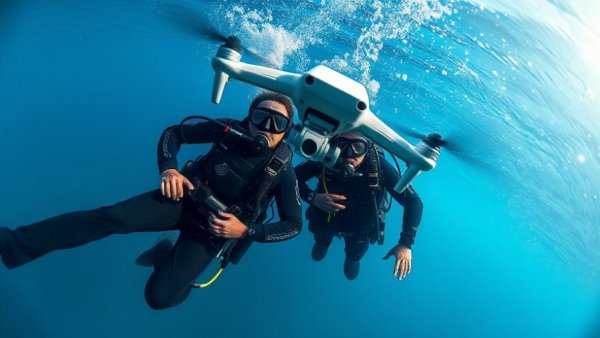
The demonstration further highlighted the tactical potential of combining aerial and underwater launch capabilities. The partnership included not only the MARS USV and Arowana UUV but also SubSea Craft’s CADDIS Unmanned Aerial System (UAS). This system allows divers to deploy both the CADDIS and Arowana from an underwater position, showcasing a significant advancement in stealth and flexibility for maritime operations.
Revolutionizing Undersea Warfare Battlespace
This integrated approach represents a paradigm shift in how maritime forces can operate unseen. By reducing reliance on conventional surface launches, the combined technology facilitates discreet missions that complicate adversary response strategies. According to Robert Gibson, Chief Engineer and Managing Director of Dragonfish Technical Solutions, the ability to integrate and deploy multiple unmanned systems from differing directions enhances operational flexibility and creates a “force multiplier” effect.
Expert Insights on Future Directions
The success of these demonstrations has implications that extend beyond this exercise, potentially reshaping undersea warfare strategies. Experts believe that as military technologies evolve, there is an increasing demand for interoperability among various unmanned systems—both aerial and underwater. This capability not only enhances tactical options but ensures forces are strategically prepared for diverse threats.
Understanding the Implications of Autonomous Systems
For industry professionals and tech enthusiasts, the implications of this demonstration are profound. The success underscores the value of collaboration between defense contractors and highlights the urgency of adapting technologies to meet fast-changing operational requirements. The integration process, completed in just one month, reinforces the notion that speed in innovation could be a decisive factor in future military engagements.




Write A Comment