
Add Row
Add Element
cropper
update
Drone Central Station
update
Add Element
  • Home
  • Categories
    • Drone Tech
    • Drone Applications
    • Drone Racing
    • Accessories
    • Real Estate
    • Military
    • Disaster
    • Drone Footage
    • Product Reviews
    • Business Profiles
August 28.2025
2 Minutes Read

Exploring the Dollyfly 16: A Game-Changer for Drone Cinematography

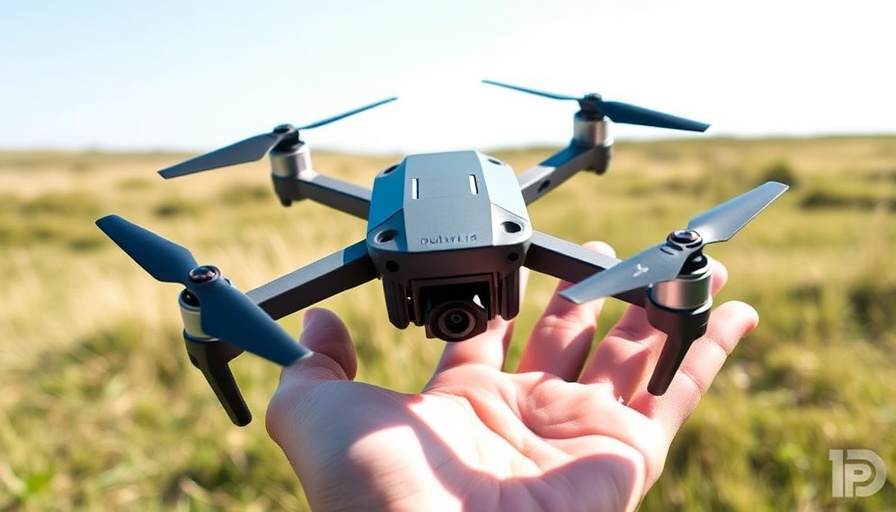
Dollyfly 16 drone displayed in hand for cinematography.

A New Era in Cinematography: The Dollyfly 16

When it comes to drone technology, the Dollyfly 16 is challenging the traditional boundaries of cinematography. We all love the innovative capabilities of drones, but few can appreciate how they revolutionize visual storytelling. As presented in the video Can a tiny 88g whoop shoot real cinema?, this lightweight drone not only competes with larger models but also opens up exciting possibilities for aspiring filmmakers.

In Can a tiny 88g whoop shoot real cinema?, the discussion dives into the groundbreaking Dollyfly 16, exploring key insights that sparked deeper analysis on our end.

Mastering Cinematic Techniques with Drones

One of the central themes discussed in the video is the creation of the "vertigo effect," a popular cinematic technique. Traditionally achieved with dollies on tracks, the goal is to manipulate the perspective while keeping the subject in focus. The host illustrates this effect while emphasizing how it’s not about speed but more about precision and stability in drone piloting. This pursuit of creativity is inspiring for drone hobbyists keen on exploring cinematography.

Why Size Doesn't Matter: The Benefits of the Dollyfly 16

At just 88 grams, the Dollyfly 16 proves that powerful capabilities can come in small packages. The lightweight design allows for easier maneuverability and less strenuous flight time. Despite its size, it houses an impressive DJI O4 Pro camera setup, which is essential for meeting modern filming standards. This means that hobbyists and professionals can achieve high-quality film production without the bulk of traditional gear.

A Breakthrough for Aspiring Filmmakers

The Dollyfly isn’t designed for racing or freestyle flying, but it stands out as a creative tool for storytelling. The video emphasizes that with its dampened camera mount, this drone is built specifically to prevent oscillations and unwanted wobbles—making it ideal for capturing smooth, cinematic shots. This speaks to a growing trend where drone technology is being fully embraced by the film industry for its innovative applications.

A Win for Drone Enthusiasts: The Giveaway

Additionally, the video offers the chance to win a second Dollyfly by visiting the channel's link. This gesture isn’t just about giving away equipment; it also promotes engagement within the community of drone enthusiasts and filmmakers. It encourages interaction among users who aspire to master drone cinematography in a fun and practical way.

Final Thoughts: The Future of Drone Cinematography

The exploration of the Dollyfly 16 reveals the potential within the ever-evolving drone landscape. As the barriers of filmmaking continue to break down with innovative technology, the Dollyfly serves as a notable example of how even smaller drones can yield significant visual impacts. For those committed to enhancing their aerial photography skills, the Dollyfly is a compelling choice.

To dive deeper into this realm of drone cinematography, consider exploring the video’s practical tips and techniques to elevate your own drone flights. Who knows, your next adventure could redefine the way you capture scenes from above!

Drone Applications

19 Views

0 Comments

Write A Comment

*
*
Please complete the captcha to submit your comment.
Related Posts All Posts
04.18.2026

Navigating Drone Regulations: Can Parks Ban Your Aerial Adventure?

Update The Confusion of Airspace Regulations and Local Laws In the realm of drone flying, many enthusiasts are often caught in the crossfire of federal oversight and local governance. Recently, questions have arisen about whether parks can impose bans or restrictions on drone activity. The Federal Aviation Administration (FAA) holds the reins over navigable airspace in the United States, which complicates matters when local counties decide to establish their own rules regarding drone operation.In Can Parks Ban You From Flying a Drone Over Them?, the discussion dives into the intricate balance between FAA authority and local regulations, prompting us to break down the key insights for drone operators. Understanding FAA Authority and Local Governance The FAA is charged with managing the airspaces, which means they dictate the altitude and general flying regulations for all aircraft, including drones. However, local governments have control over the land they manage. This distinction allows counties to set rules regarding drone activity on their properties, focusing on activities like takeoff and landing rather than the flight path itself. If a park declares, 'no drones allowed,' it's primarily trying to prevent users from launching or landing their devices within their boundaries. The Gray Area of Airspace Use: What You Need to Know The line becomes blurrier when you consider launching a drone from outside park boundaries. For example, if you take off from a nearby sidewalk or private property, you're likely operating within the law per FAA regulations, even if your drone flies over the park. This legal gray area often leads to confusion; drone operators can comply with federal regulations but still face local citations or disputes with park authorities. Hence, staying informed about both federal and local rules is crucial. Planning Your Drone Flight: Essential Steps For those eager to capture stunning aerial views near parks, it’s recommended to adopt a proactive approach. Always check local ordinances and park websites for any drone regulations before planning your flight. Consider reaching out directly to the park management—asking for permission or exploring the possibility of a permit could save you time, energy, and possible legal trouble. Actionable Tips for Drone Enthusiasts To navigate the complexities of drone operation near parks, here are some tips: Research Local Regulations: Before flying, consult local ordinances to ensure no conflicts with existing laws. Check Park Websites: Many parks list their drone policy plainly, which can save you from unwanted surprises. Contact Authorities: If in doubt, don’t hesitate to ask park officials about their drone policies to gain clarity. Understanding the nuances of drone flying, especially over parks, is essential for any operator looking to stay compliant. As mentioned in the video Can Parks Ban You From Flying a Drone Over Them?, local governments have authority over land use but must align with FAA regulations governing airspace. This vital distinction needs careful navigation, ensuring safe and responsible drone operation while respecting local laws.

04.17.2026

Matternet and SoftBank Robotics America Join Forces to Transform Drone Delivery Networks

Update Exploring the Future of Drone Delivery in Healthcare and Logistics The partnership between Matternet and SoftBank Robotics America signifies a crucial shift in the landscape of delivery logistics, focusing particularly on healthcare and enterprise operations. As urban congestion, labor shortages, and rising costs threaten traditional last-mile delivery services, the introduction of drone delivery systems presents an innovative solution that aims to streamline operations while meeting the increasing customer demand for speed and reliability. Rising Demand for Efficient Delivery Solutions Last-mile delivery has become a bottleneck in the logistics chain, with slow turnaround times leading to frustrated customers. According to recent reports, companies like Advocate Health are stepping in to tackle these challenges. They plan to implement the largest hospital-based drone delivery network in the U.S., aimed at improving the accessibility of medications and medical supplies in underserved areas. The integration of drone delivery is expected to not only reduce delivery times but also enhance diagnostic processes by facilitating swift movement of lab samples, thus revolutionizing how healthcare providers serve their patients. The Shift from Development to Real-World Application Both Matternet and SoftBank emphasize the transition from developmental technologies to operational frameworks. Matternet’s CEO, Andreas Raptopoulos, states that their partnership with SoftBank is pivotal in establishing autonomous networks that will transform the logistics landscape. This sentiment resonates across the industry, as companies prioritize scalable, measurable solutions over mere technological advancements. The talk isn’t just about creating drones; it’s about effectively operationalizing them for everyday logistics challenges. Regulatory Milestones and Future Prospects Matternet enters this collaboration backed by significant regulatory achievements, including FAA Type Certification, paving the way for extensive commercial drone flights across the U.S. and Europe. These milestones signal readiness for broader deployment. Innovations in drone technology are now shifting focus from testing phases to scalable operations, which bodes well for industries reliant on efficient logistics structures. Highlighting the Economic and Operational Benefits The potential cost savings associated with drone delivery are substantial. For instance, Blueflite’s operations within Michigan have demonstrated how drone logistics can significantly lower transportation costs while expediting delivery times. Tracy Cleveland, Vice President of Supply Chain at Munson Healthcare, highlighted the operational efficiencies that drones could bring, stating that current road transport practices are both slow and costly. Introducing drones can lead to safer and more efficient systems that ultimately improve patient outcomes. Looking Ahead: Implications for Industry Professionals As this partnership unfolds, industry professionals and tech enthusiasts should keep an eye on how these drone delivery systems evolve. From enhancing supply chains to revolutionizing emergency healthcare response, the implications are profound. Understanding the operational capabilities of drones can open doors for innovative solutions in various sectors. As Matternet and SoftBank work towards establishing robust drone networks, the potential for improving delivery logistics could serve as a model for future advancements in the tech landscape. For tech enthusiasts and industry professionals alike, staying informed about these developments is essential. The landscape of drone delivery is rapidly changing, and opportunities exist for those who adapt to and embrace new technologies.

04.16.2026

Donecle's €10 Million Boost: Revolutionizing Drone-Based Aircraft Inspection

Update Donecle Secures €10 Million for Drone Technology Expansion Donecle, a prominent player in the drone inspection industry, has successfully raised €10 million in funding aimed at expanding its innovative drone-based aircraft inspection platform. This technology is designed not only to enhance the efficiency of aircraft inspections but also to significantly reduce turnaround times – a critical factor for airlines and maintenance providers. The Growing Demand for Drone-Based Inspections The global aerospace industry is increasingly recognizing the value of integrating drone technology into their operational processes. The demand for quicker and more efficient inspections is skyrocketing, driven by stricter regulatory requirements and a need for safety. Donecle’s platform leverages advanced imaging technology and artificial intelligence to inspect aircraft surfaces and identify potential issues. This allows for comprehensive analysis with pinpoint accuracy, ensuring that safety standards are upheld while minimizing service disruption. How Donecle's Technology Works Donecle’s unique approach utilizes autonomous drones fitted with high-resolution cameras to carry out detailed inspections. The captured data is processed through machine learning algorithms, allowing the system to not only detect flaws but also learn and adapt over time for better accuracy in future inspections. This approach offers a forward-thinking solution to the traditional manual inspection methods, which often rely on human inspection teams that can be time-consuming and error-prone. A Bright Future with Funding Boost The recent funding will allow Donecle to further develop their platform and increase their market presence. This cash injection is pivotal for enhancing R&D efforts, expanding their operational capabilities globally, and potentially increasing their workforce. Investors see the growing trend toward automation and efficiency, positioning Donecle as a frontrunner in an evolving market. Implications for the Industry Donecle’s advancements represent not just a technological leap but also a significant shift in how safety and maintenance protocols will be executed in aviation. Shorter inspection periods translate into less downtime for aircraft, thereby enhancing the profitability for airlines and ensuring that passenger safety remains paramount. The integration of drones into aviation maintenance may set new benchmarks for efficiency and reliability across the industry. Why This Matters to Tech Enthusiasts The growth of drone technology and its application in industries like aviation signals a broader trend towards automation and the digital transformation of traditional industries. For tech enthusiasts and industry professionals, this not only represents an exciting time for innovation but also serves as a testament to the potential impacts of technology on safety and efficiency. As companies like Donecle continue to innovate, they pave the way for the future of industry standards. Conclusion As Donecle strides toward a future where drone inspections become the norm, industry stakeholders, from airlines to maintenance providers, should take note. The implications of this technology go beyond cost savings and efficiency; they touch upon the core of operational safety and regulatory compliance. As we watch this space unfold, one can expect that the integration of drones into sectors like aviation will continue to grow, ushering in a new era of innovation.

Terms of Service

Privacy Policy

Core Modal Title

Sorry, no results found

You Might Find These Articles Interesting

T
Please Check Your Email
We Will Be Following Up Shortly
*
*
*