
Add Row
Add Element
cropper
update
Drone Central Station
update
Add Element
  • Home
  • Categories
    • Drone Tech
    • Drone Applications
    • Drone Racing
    • Accessories
    • Real Estate
    • Military
    • Disaster
    • Drone Footage
    • Product Reviews
    • Business Profiles
September 08.2025
2 Minutes Read

Explore the New V16 Radio: A Game-Changer for Drone Control

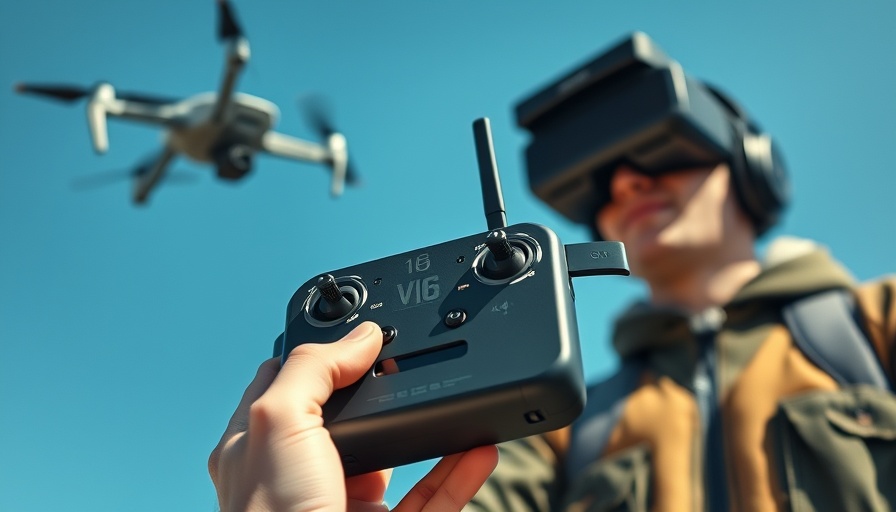
New V16 Radio for Drones with man flying under clear blue sky.

Revolutionizing Drone Control: The New V16 Radio

The V16 radio is capturing the attention of drone enthusiasts and professionals alike, embodying advancements in drone control technology. This new transmitter makes it easier for users to manage multiple configurations, enhancing both flight stability and responsiveness. With an intuitive interface designed for seamless operation, the V16 propels drone flying into a new realm.

In 'New V16 radio, Caddx ascent /protos, TBS chupito', the conversation dives into the latest advancements in drone technology, prompting our deeper analysis of their implications for both hobbyists and professionals.

Innovative Features of the Caddx Ascent and Protos

The Caddx Ascent and Protos are setting benchmarks for camera systems within the drone sector. Specifically designed to enhance aerial footage quality, these cameras bring forth improved low-light performance and distortion correction. Their ability to capture high-resolution images ensures that both amateur and professional drone pilots can achieve cinematic results from their aerial adventures.

The TBS Chupito: Compact Yet Powerful

Adding to the exciting developments is the TBS Chupito. This ultra-compact control unit is noted for its portability and functionality, offering pilots the ability to fine-tune their drone settings without bulky equipment. Its advanced features, including customizable transmitter outputs, make it a valuable tool for drone racing and other competitive activities.

Why This Matters to Drone Hobbyists and Professionals

Understanding these new technologies is essential for anyone involved in the drone industry. The integration of user-friendly features in the V16 radio, paired with the high-performance capabilities of the Caddx Ascent, enhances the overall flying experience. For professionals, these advancements can lead to better safety, efficiency, and quality of output in both recreational and commercial applications.

Future Predictions: What Lies Ahead in Drone Technology?

As drone technology continues to evolve, experts predict an increase in automation and enhanced AI capabilities. Future models will likely feature more robust flight assistance systems and better integration with various apps designed for enhanced user control and experience. This trajectory suggests that drone users can look forward to easier operations and more creative possibilities in capturing stunning aerial footage.

Getting Informed: Essential Knowledge for Drone Enthusiasts

For those passionate about drones, understanding the latest innovations is crucial. Products like the V16 radio and the Caddx Ascent are more than just tools; they are stepping stones toward an era where drones will be ubiquitous in various fields, from cinematography to search and rescue operations. Keeping abreast of these trends can empower users to make informed decisions about their equipment and usage strategies.

Drone Tech

26 Views

0 Comments

Write A Comment

*
*
Please complete the captcha to submit your comment.
Related Posts All Posts
04.14.2026

The Future of Aerial Technology: Persistent Flight in the Stratosphere

Update Transforming the Skies: The Rise of Persistent Stratospheric Drones As the demand for unmanned aerial vehicles (UAVs) expands, a new frontier in drone technology is opening up: persistent flight in the stratosphere. Justin Selfridge, PhD, CEO of Devorto, is at the helm of this revolution, paving the way for sustained airborne operations that can redefine numerous industries. Understanding Stratospheric Flight: What It Means for Industries The stratosphere, lying approximately 10 to 50 kilometers above the Earth’s surface, is often seen as the next great expanse for drone utilization. By utilizing this altitude, drones can avoid many of the obstacles and regulations applicable to lower flying UAVs. Selfridge emphasizes that persistent stratospheric drones can serve pivotal roles in sectors such as telecommunications, surveillance, and disaster management, delivering critical connectivity and data collection without the limitations of terrestrial infrastructure. Addressing Challenges: The Technological Hurdles of Stratospheric Drones Venturing into the stratosphere is not without its challenges. Dr. Selfridge highlights the technical obstacles that come with high-altitude operation, such as maintaining stable flight conditions amidst varying atmospheric pressures and temperatures. Innovations in materials science and drone design are vital to address these issues, as are advancements in energy efficiency and flight management systems. Future Opportunities: The Path Ahead for Devorto Looking ahead, the potential applications of stratospheric drones are vast. Industries are keenly interested in how these technologies can be harnessed for emergency responses, environmental monitoring, and even military applications. By conducting extensive research and development, Devorto aims to be a leader in this emerging field, promising enhanced reliability and innovative capabilities to users around the globe. The Impact of Regulations on Drone Innovation Despite the advantages, regulatory environments pose a significant barrier to the deployment of persistent UAVs. As drone technology outpaces legislation, engaging with regulatory bodies becomes imperative for companies like Devorto. Striking a balance between safety and innovation will be crucial for unlocking the full potential of stratospheric operations. The Broader Implications: A New Era in Aerial Surveillance and Connectivity The implications of robust stratospheric drones extend beyond individual sectors. Enhanced aerial surveillance can improve national security, while widespread connectivity can elevate remote areas, fulfilling global technology equity efforts. Selfridge's vision underscores the transformative power that drones can harness to bridge the digital divide. Conclusion: Why Stratospheric Drones Matter to Us All In conclusion, the strides made by Devorto in the realm of persistent stratospheric drones not only hold the potential to revolutionize industries but also promise a future of increased connectivity, enhanced safety, and broader access to technological advancements. As we stand on the brink of this new era in drone technology, those intrigued are encouraged to stay informed. The conversation is just beginning, and understanding these innovations today can illuminate the possibilities of tomorrow. Call to Action: Stay updated on innovations in drone technology and explore how persistent stratospheric drones can impact various sectors. Knowing the future of drones is crucial for anyone invested in technology or industries reliant on aerial data.

04.14.2026

The FCC's Call for Public Comments: Shaping the Future of Drone Technology

Update Understanding the FCC's Recent Call for Public Comments The recent news regarding the FCC's call for public comments sheds light on the evolving relationship between government regulations and the technology landscape. As technology enthusiasts and industry professionals, it's crucial to engage with how these policies impact drone usage, connectivity, and emerging tech innovations.In FCC Opens Public Comments, the discussion dives into drone regulations, exploring key insights that sparked deeper analysis on our end. Why Public Comments Matter Public comments provide a platform for citizens and professionals alike to express their opinions and perspectives regarding regulatory frameworks that govern technology. The FCC, or Federal Communications Commission, plays a pivotal role in managing telecommunications, including aspects directly linked to drone technology. With citizens actively involved in shaping these policies, the result is more robust and adaptive regulations. The Ongoing Shift in Drone Regulations The announcement from the FCC aligns with a broader trend of increased scrutiny and revision of the regulations surrounding drone operations. As drone technology becomes more sophisticated, issues regarding safety, privacy, and airspace management are coming to the forefront. These new regulations are not only essential for ensuring safe drone operations but also for fostering innovation and encouraging industry growth. How This Affects Drone Hobbyists and Industry Professionals For tech enthusiasts and drone hobbyists, understanding these ongoing regulatory discussions is imperative. The potential for new rules can influence everything from commercial drone delivery services to recreational flights. Industry professionals need to stay informed and voice their concerns to ensure that regulations support innovation while maintaining public safety. Engage in the Conversation The FCC's initiative emphasizes the importance of community involvement in shaping tech policies. By participating in public comments, drone operators and tech fans can share their experiences and expertise, which can greatly influence the outcome of future regulations. Engaging in this dialogue can help guarantee that emerging drone technologies are not stifled by overly rigid regulations. Looking Ahead: The Future of Drone Technology As we contemplate the future, discussions initiated by public comments pave the way for progressive regulations tailored to accommodate new technological advancements. With innovations such as AI integration and improved connectivity on the horizon, it is vital for regulatory bodies to remain flexible and adapt to the evolving landscape.Understanding these dynamics can equip both enthusiasts and professionals to better navigate the upcoming changes and make informed decisions.We encourage our readers to stay informed about the FCC's developments regarding public comments and participate in shaping the future of drone technology. Together, we can work towards a more innovative and safe drone ecosystem.

04.13.2026

Is SORA Stifling Drone Innovation? How Regulatory Bottlenecks Affect Growth

Update Understanding SORA: A Double-Edged Sword for the Drone IndustryThe European drone industry has positioned itself as a leader in safety and innovation, heavily relying on the Specific Operations Risk Assessment (SORA) as a vital regulatory framework. While SORA was designed to ensure safe and risk-based approvals for complex operations, it faces significant challenges that inhibit growth and competitiveness.Approval Delays: A Damaging RealityOne of the primary criticisms of SORA is the lengthy approval timelines that have become the norm across Europe. Operators now find themselves waiting upwards of six months to a year for what should be routine approvals. This unpredictability poses a significant challenge, especially for businesses operating in sectors where agility and rapid response are critical. As highlighted in a recent analysis, a four to eight-month approval window can thwart contracts and deter investment, ultimately pushing operators towards more predictable pathways, such as the Open Category of EU drones.The Complexity of SORA: A Barrier to EntryDespite its theoretical intentions, SORA’s complexity has made it a hurdle for many in the drone industry. Operators often struggle to navigate the rigorous documentation and risk modeling required for approvals. This complexity not only decreases the speed of approvals but pushes smaller operators out of the market, resulting in a stagnation of innovation. An uncomfortable truth is that SORA demands a level of competency that not many in the industry possess, creating a landscape where only those with substantial resources can thrive.From Regulatory Framework to Market GatekeeperInitially intended as a tool to facilitate the integration of UAS into European airspace, SORA has shifted into a de facto commercial barrier for drones. Operators now find that SORA serves as not just a risk assessment method but as a gatekeeper that determines who can operate commercially and under what conditions. As expressed in the wider discourse, this outcome runs contradictory to the foundational aims of creating a safe and innovative environment for the drone industry.Contrasting Regulatory Approaches: The U.S. vs. EuropeAn insightful comparison between the European SORA framework and the FAA’s permitting system in the U.S. reveals stark contrasts. In the U.S., operators can expect waivers for higher-risk operations within 30-60 days, a timeline that heavily favors business planning and industry growth. This significant difference highlights the need for Europe to evolve its regulatory methods to better align with industry realities and support rather than stifle innovation.The Call for Reform: Embracing Simplicity to Foster GrowthThe current critique is not a demand for deregulation but rather a call for smarter regulation. SORA must adapt to be a tool that empowers and enables growth rather than remains an obstacle. Streamlining approval processes and embracing capability-based assessments could revolutionize the landscape, making it easier for businesses to plan and expand operations.A Path Forward: What’s Needed for Industry GrowthIf Europe's drone industry is to maintain its competitive edge, it needs systemic reforms that simplify oversight while ensuring safety remains paramount. In doing so, Europe can safeguard its ambition of becoming a hub for technological innovation while laying a solid foundation that fuels future growth and sustainability.

Terms of Service

Privacy Policy

Core Modal Title

Sorry, no results found

You Might Find These Articles Interesting

T
Please Check Your Email
We Will Be Following Up Shortly
*
*
*