
Add Row
Add Element
cropper
update
Drone Central Station
update
Add Element
  • Home
  • Categories
    • Drone Tech
    • Drone Applications
    • Drone Racing
    • Accessories
    • Real Estate
    • Military
    • Disaster
    • Drone Footage
    • Product Reviews
    • Business Profiles
August 24.2025
2 Minutes Read

Drone Fire Incident on M20 Highlights Importance of Safety Regulations in Border Surveillance

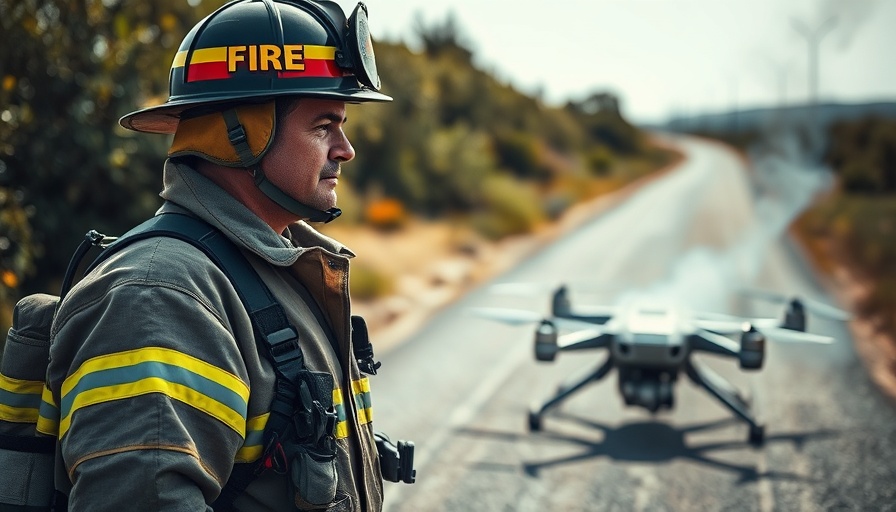
Firefighter at UK border drone fire site.

Understanding the Incident: What Happened on the M20?

A recent incident on the M20 motorway in Kent, UK, captured the attention of local authorities and tech enthusiasts alike. The Kent Fire and Rescue Service confirmed that a drone, specifically a Tekever AR5 Evolution, caught fire while being transported. This drone is primarily utilized for monitoring maritime activity across the English Channel, helping to identify and track potentially illegal vessels.

Fortunately, fire crews promptly extinguished the flames with no injuries reported, indicating that the event was a relatively contained occurrence rather than a dramatic disaster.

The Role of Drones in Border Surveillance

Understanding the purpose of the AR5 Evolution drone is essential in appreciating the significance of this incident. With the capability to remain airborne for over 20 hours and equipped with state-of-the-art sensors, including maritime radars, these drones play a crucial role in border surveillance. They help authorities monitor activity across the Channel, ensuring better security and action against any illegal crossings.

Another model in the Tekever drone lineup, the AR3, complements the AR5's missions with its tactical flexibility. Its ability to take off vertically allows it to operate in various terrains, enhancing surveillance operations by providing closer inspections of suspicious boats.

Broader Implications for Drone Safety and Regulations

This incident prompts a closer look at the regulations surrounding drone transportation and operation. As drones become increasingly integral to national security measures, ensuring their safe handling and usage is paramount. The incident on the M20, while minor, reflects the ongoing challenges of managing sophisticated technology in everyday settings.

Whether you are a drone hobbyist, an industry professional, or simply a tech enthusiast, understanding these nuances can lead towards better practices and enhanced safety protocols.

A New Era of Drone Utilization

The rise in the use of drones, particularly in governmental sectors, showcases a juncture between advanced technology and everyday applications. With aerial surveillance becoming commonplace in border patrol, disaster management, and even commercial deliveries, the future of drone technology is both exciting and fraught with challenges related to safety and regulation.

Engaging with the implications of such technology encourages us to ponder: How can we ensure drones serve their purpose without endangering public safety? The ongoing developments in drone technology will surely shape various industries in the coming years, reminding us that with innovation comes responsibility.

Drone Tech

28 Views

0 Comments

Write A Comment

*
*
Please complete the captcha to submit your comment.
Related Posts All Posts
04.20.2026

Military Tech at Your Doorstep: The $41K Shahed Drone from China

Update The Rise of Accessible Military Technology Imagine receiving an unsolicited advertisement for a drone that could very well be employed on a battlefield. This provocative scenario has become a reality, as Shenzhen-based retailer XingkaiUAV offers its XK-F50 tactical drone—touted as a "long-range suicide drone"—available for purchase online for $41,000. Designed for high-speed, low-altitude penetration missions, this drone boasts impressive specifications including a range of 540 kilometers and the capability to carry 20 kilograms of payload. Yet, the implications of such availability are multifaceted, raising critical questions about the normalization and commercial accessibility of advanced military technology. Why the Availability of Military Drones Matters The emergence of companies like XingkaiUAV represents a significant shift in the military technology landscape. Historically, military technologies have been tightly controlled and restricted to state entities or defense contractors. However, casually marketed information about offensive capabilities, such as "strike accuracy" and "battlefield deployment", signifies a dangerous blurring of lines between civilian applications and military potential. This issue mirrors concerns outlined in China's Drones, which highlights the rapid expansion of China's military drone capabilities amidst rising international tensions. Understanding the Dual-Use Nature of Modern Drone Technology In the case of the XK-F50, although the company highlights its use for civilian purposes such as firefighting and mapping, the explicit mention of its combat capabilities undermines this narrative. This dual-use nature poses serious ethical dilemmas as both humanitarian and destructive purposes can be served by a single technology, a phenomenon echoed in reports of China’s military drone exports reaching areas like Nigeria and Pakistan, highlighting the potential for misuse in conflict zones. A Global Perspective on the Drone Arms Race The market dynamics surrounding military drones are not confined to China. As military tensions escalate globally, countries are increasingly investing in UAV technologies that can redefine conventional warfare. Insights from China Trains AI-Controlled Weapons With Learning From Hawks, Coyotes explain how military-driven AI advancements, such as predictive algorithms, evolve combat drone capabilities. This indicates a broader trend where technological innovations, originally derived from military applications, proliferate into civilian markets—with implications for global security. Future Trends and Operational Models Developments in drone technology illustrate a paradigm shift from traditional warfare towards more automated forms of conflict engagement. As nations bolster their inventories with inexpensive yet highly capable drones, the challenges for international regulation become increasingly complex. Military analysts warn that such advancements could embolden state and non-state actors alike, leading to a potential arms race in drone technology. Actionable Insights for Drone Enthusiasts and Professionals For tech enthusiasts and industry professionals, staying informed about advancements and ethical considerations surrounding drone technology is pivotal. The easy availability of sophisticated drones such as those offered by XingkaiUAV necessitates an informed discourse about responsible usage and regulatory frameworks. As drone hobbyists and industry experts, engaging with the evolving narrative of drone technology could foster a more accountable landscape amidst the vast potential for innovation.

04.19.2026

Exploring the FAA DETER Program: Fast-track Penalties for Drone Offenders

Update Understanding the FAA’s New DETER Program for Drone OperatorsIn a significant overhaul of drone enforcement policies, the Federal Aviation Administration (FAA) has introduced the Drone Expedited and Targeted Enforcement Response (DETER) program. This innovative initiative offers a streamlined approach for first-time offenders of drone regulations, aiming to expedite the resolution of legal issues while promoting safety in the airspace.Rapid Actions for Swift ViolationsThe DETER program, established following the executive order on Restoring American Airspace Sovereignty, replaces the previously more lenient compliance actions used for minor infractions. Instead of lengthy appeals and drawn-out legal proceedings, first-time violators are offered the opportunity to resolve their cases swiftly, reducing their civil penalties in exchange for waiving their rights to appeal. This shift towards expedited enforcement reflects an urgent need for regulatory bodies to maintain safety as drone usage multiplies across both recreational and commercial sectors.What's New Under DETER?Under this program, operators found to have committed relatively minor violations will receive formal violation notices informing them of the specifics of their case. Crucially, they have just 10 days to respond, pay any proposed penalties, and complete corrective actions. Failure to do so can lead to more severe repercussions, pushing operators towards compliance rather than evasion.A Clarified Vision of EnforcementWhile DETER does provide a pathway to mitigate penalties for first-time offences, it comes with strict exclusions. Violators who engage in drug-related activities, use weaponized drones, or fly in sensitive areas without authorization will not qualify. This delineation underscores the FAA’s focus on promoting safety while reserving harsher penalties for those who blatantly disregard regulations.A Broader Perspective on Industry TrendsThe introduction of the DETER program is also reflective of a larger global trend where aviation authorities are shifting from punitive measures towards more rehabilitative solutions. Countries worldwide are adopting tiered enforcement frameworks to address drone-related issues more effectively, with an emphasis on first-time mistakes rather than criminal actions.Implications for Drone OperatorsFor drone hobbyists and professionals alike, understanding the DETER program is crucial. It signifies a move towards enhanced accountability in the airspace while encouraging compliance and education among operators. The FAA is aware that, as the number of drone users increases, so too does the complexity of maintaining safety and regulatory compliance. Programs like DETER are becoming essential in managing this balance.Conclusion: Navigating the New LandscapeThe DETER initiative represents a pivotal shift in how drone infractions are addressed in the U.S. As operators become more familiar with these regulations and the ramifications of violations, they are encouraged to adopt safer flying practices. This new approach not only serves to maintain order in the skies but also fosters an educational atmosphere that allows for a growing culture of safety within the drone community. For all drone operators, being informed about this program could provide critical insights on navigating the regulations effectively.

04.17.2026

Discover How Mojave STOL Can Revolutionize Drone Hunting Missions

Update Introducing the Mojave STOL: A Game-Changer in Drone Technology General Atomics has unveiled an exciting new mission for its Mojave short takeoff and landing (STOL) drone, positioning it as a formidable asset against unmanned aerial threats. This innovative shift, presented at the Army Aviation Association of America’s (AAAA) 2026 Warfighting Summit, highlights an evolving role of the Mojave STOL that may well redefine the future of military drone operations. Capabilities That Stand Out The Mojave STOL is not just another drone; it encapsulates versatility, enabling a vastly diverse array of missions aimed at enhancing military readiness. General Atomics' C. Mark Brinkley noted, "Everything you see is a capability we can do right now, things already demonstrated on a real, flying aircraft." The system is envisioned to hunt unmanned aerial vehicles (UAVs) using advanced laser-guided Advanced Precision Kill Weapon System II (APKWS II) rockets, showcasing a fusion of precision technology with unmanned flight operations. Utilizing an EagleEye radar system, the drone can track targets with pinpoint accuracy. The Mojave is also designed to lead attack helicopters like the AH-64 Apache and UH-60 Black Hawk into hostile areas, demonstrating its robust operational scope in real combat situations. With a maximum endurance of over 25 hours and the ability to operate from unpaved fields, the Mojave can significantly extend logistical support and air power projection in contested environments. Integration of Advanced Technologies The Mojave incorporates cutting-edge features that enhance its engagement capabilities. For instance, it employs the APKWS II, which has already shown effectiveness against airborne targets. This capability implies that military operations could soon benefit from a cost-efficient yet high-impact way to neutralize drone threats. The video presentation from General Atomics effectively outlined the drones engaging enemy assets, destroying mobile surface-to-air missile systems, which attests to the drone's offensive capabilities. Coupled with loitering munitions like the AeroVironment Switchblade 600, the Mojave can carry out precision strikes while maintaining a safe standoff distance. Future Implications for Military Operations As military strategies evolve to meet the demands of modern warfare, the Mojave STOL’s capabilities become increasingly relevant. Its ability to function effectively from various surfaces—even on naval carrier decks—positions it as an asset to meet the operational requirements of dispersed forces in the Indo-Pacific theater. This shift not only highlights the drone's flexibility but also its potential longevity in varied combat scenarios. Transforming into a drone hunter capable of executing counter-UAS operations signifies a paradigm shift in how forces might approach aerial threats. In an environment flooded with UAVs, the capacity for rapid response and precise engagement places the Mojave STOL at the forefront of defense systems likely to dominate future battlefields. Enhanced Reconnaissance and Support Functions In addition to offensive capabilities, the Mojave STOL retains vital roles in reconnaissance and support. With a substantial payload capacity, the drone can integrate various sensor systems, facilitating comprehensive battlefield awareness essential for ground forces. This feature not only helps in identifying enemy positions but also streamlines logistics, enabling timely resupply operations and ground support in areas previously deemed inaccessible. Conclusion: The Future is Now General Atomics’ strategic pivot toward employing the Mojave STOL for diverse military functions symbolizes a significant leap in drone technology. By prioritizing STOL capabilities, they're ensuring that this system can meet modern warfare demands head-on, seamlessly integrating with existing military operations while enhancing air power in settings characterized by rapid change and uncertainty. The potential of the Mojave STOL warrants close attention from military strategists and drone enthusiasts alike.

Terms of Service

Privacy Policy

Core Modal Title

Sorry, no results found

You Might Find These Articles Interesting

T
Please Check Your Email
We Will Be Following Up Shortly
*
*
*