
cropper
update
Drone Central Station
update
  • Home
  • Categories
    • Drone Tech
    • Drone Applications
    • Drone Racing
    • Accessories
    • Real Estate
    • Military
    • Disaster
    • Drone Footage
    • Product Reviews
    • Business Profiles
August 20.2025
2 Minutes Read

Discover How WarrenUAS is Shaping the Future of Drone Education at CUAV Expo 2025

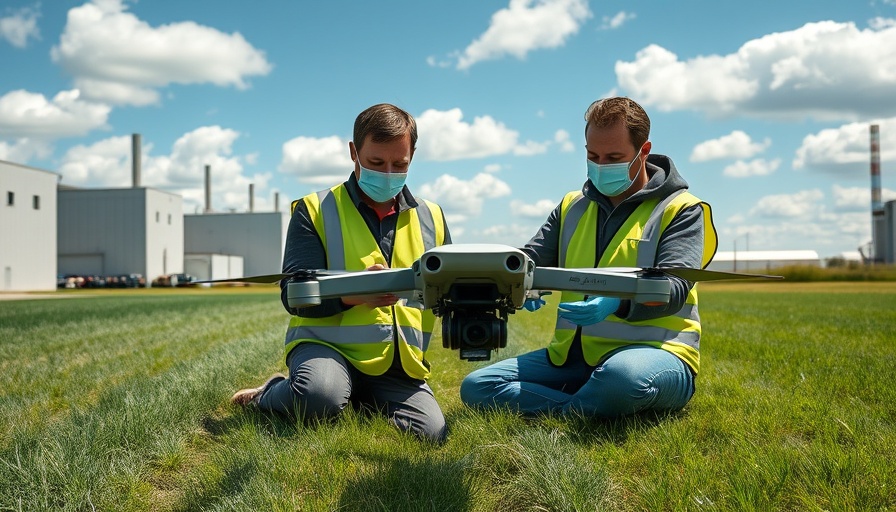
Drone Education at CUAV Expo 2025: Two adults handling a drone outdoors.

WarrenUAS Leads in Drone Education at CUAV Expo 2025

WarrenUAS, an innovative drone education program offered through Warren Community College in Washington Township, New Jersey, is taking major strides in training the next generation of drone professionals. With its participation at the upcoming Commercial UAV Expo in Las Vegas on September 2-4, the program aims to showcase its cutting-edge curriculum and technological advancements. Staff members will engage with attendees at Booth #249, providing insights into the evolving landscape of drone technology.

Why Drone Education Matters

As drones are increasingly transforming industries such as agriculture, construction, and logistics, the demand for skilled professionals is skyrocketing. Will Austin, the president of Warren County Community College, emphasizes the relevance of their offerings, noting that whether you are an aspiring drone operator or a seasoned technology veteran, WarrenUAS provides something of value. The program is designed to cater to diverse interests, ensuring that everyone from hobbyists to professionals can benefit.

Expanding Offerings: The Role of Precision Agriculture and Counter UAS

WarrenUAS has emerged as one of the leading drone education programs in the United States. With recent expansions that focus on precision agriculture and counter drone (Counter UAS) training, the program aims to prepare students to operate in an increasingly complex and regulated industry. Austin highlights the program's commitment to employing state-of-the-art equipment and expert faculty, enhancing the educational experience for every student. These new offerings not only equip students with technical skills but also prepare them to tackle the future of drone technology responsibly and ethically.

The Future of Commercial Drones

According to Peter Miller, chief pilot at WarrenUAS, the upcoming expo represents a crucial opportunity for networking and gaining insights into the future of commercial UAS applications. Major industry players and stakeholders converge at the Commercial UAV Expo, providing an invaluable chance for educators and students alike to understand emerging trends and technological shifts. As the industry grows, events like these become essential for building connections and staying informed.

How WarrenUAS Stands Out

One of the key distinctions of WarrenUAS is its unique Federal Aviation Administration (FAA) exemption that allows the program to train students on unmanned aircraft systems over 55 pounds and undertake beyond-visual-line-of-sight (BVLOS) operations. This credential positions WarrenUAS among a select group of institutions nationwide, ensuring that students receive comprehensive training compliant with federal regulations.

Join the Drone Revolution

The educational initiatives at WarrenUAS are not just about flying drones; they represent a shift in how future generations will understand technology's role in various sectors. As drones facilitate new efficiencies, WarrenUAS is committed to enhancing societal applications through responsible training and innovation. For those interested in joining this exciting field, attending the CUAV Expo will provide a first-hand look at cutting-edge technology and its diverse applications.

To learn more about WarrenUAS and their programs, visit [WarrenUAS Website]. Be sure to register for the Commercial UAV Expo and stop by Booth #249 to explore the future of drone education.

Drone Applications

11 Views

0 Comments

Write A Comment

*
*
Please complete the captcha to submit your comment.
Related Posts All Posts
05.14.2026

Master the Art of Safe Drone Flight Over Water with These Tips

Update Understanding the Challenges of Flying Drones Over Water Flying a drone over water can be an exhilarating experience, offering stunning perspectives and capturing breathtaking drone footage. However, it also presents unique challenges and risks. Drones, which are often expensive and sensitive electronic devices, can easily be damaged by water exposure. Thus, understanding how to safely operate your drone in these environments is crucial for both hobbyists and professionals alike.In 'How To Safely Fly Your Drone Over Water,' the discussion dives into effective strategies for enhancing drone safety, exploring key insights that sparked deeper analysis on our end. The Importance of Pre-Flight Planning Before embarking on a drone adventure over water, it's essential to create a detailed flight plan. This includes knowing your drone's capabilities, understanding local regulations, and identifying safe takeoff and landing zones. A well-thought-out plan can help mitigate risks associated with unexpected weather changes or drone malfunctions, ensuring a smooth flying experience. Essential Gear for Water-Based Drone Flights One of the most practical investments you can make for safely flying a drone over water is obtaining protective gear. This can include waterproof cases, floating attachments, and even specialized drone models designed to withstand exposure to moisture. Additionally, it’s beneficial to carry a few essential tools and accessories such as extra batteries, propeller guards, and a landing pad to ensure you’re prepared for any situation. Tips for Emergency Situations No matter how well you plan, circumstances can change unexpectedly while flying over water. To ensure safety, drone operators should be ready to act quickly in emergencies. Familiarize yourself with the return-to-home feature, which can automatically guide the drone back to its launch point if it loses connection or battery life is low. Understanding how to respond to various scenarios—such as losing GPS signal or detecting rapid descent—provides additional assurance when flying in challenging environments. Legal Considerations: Stay Compliant When flying a drone, especially over water bodies, it’s important to stay updated with legal regulations. Different regions have varying restrictions, particularly in environments that could affect wildlife or are close to restricted areas. Always check local drone regulations before taking off to avoid fines and ensure responsible use of technology. Final Thoughts on Drone Safety Over Water Flying your drone over water might appear daunting, but with proper preparation and knowledge of best practices, it can lead to some of the most rewarding experiences. By understanding the potential risks, developing a solid game plan, investing in the right gear, and knowing the legal landscape, you can enjoy capturing spectacular aerial images while safely navigating the challenges of water-based drone flights.

05.13.2026

Saildrone's Game-Changing Deployment: 16 Voyager USVs Reinvent Coast Guard Surveillance

Update The Launch of Saildrone's 16 Voyager USVs: A Game Changer for Coast Guard Operations In a landmark initiative, Saildrone, a California-based company specializing in autonomous maritime technology, has deployed 16 Voyager unmanned surface vehicles (USVs) to support U.S. Coast Guard missions across the Great Lakes and northeast regions. This ambitious project, backed by a $15.5 million contract, marks a significant stride in enhancing maritime domain awareness at a time when such surveillance is critically needed. Understanding the Challenges of Great Lakes Patrols The Great Lakes represent a complex maritime environment, encompassing thousands of miles of border with Canada, busy shipping routes, and various natural challenges ranging from severe weather to vast distances. Traditional crewed patrols often face limitations due to these conditions, making persistent monitoring arduous. Saildrone's Voyager fleet aims to provide continuous, real-time surveillance, thereby empowering the Coast Guard to efficiently monitor vessel activities and detect suspicious actions that may signal criminal undertakings, such as drug smuggling. Enhancing Maritime Domain Awareness Each Saildrone Voyager is equipped with state-of-the-art sensors, including high-definition cameras and advanced radar systems. This advanced equipment enables the boats to gather valuable data on vessel activity and deliver real-time intelligence directly to Coast Guard command centers. The system allows for more agile responses, with the Coast Guard able to deploy manned assets only when a verified threat is present—maximizing resource utilization and ensuring optimal operational efficiency. A Solution Tailored for Fishing Regulation In the Northeast, the Coast Guard's focus shifts toward combating illegal, unreported, and unregulated (IUU) fishing. The experience has shown that using the Voyager USVs provides continuous monitoring of fishing vessel activities, helping to protect America’s domestic fisheries. This dual capability of ensuring security from border threats while protecting vital economic interests reflects a remarkable evolution in maritime surveillance strategies. The Voyager USV: A Breakthrough in Autonomous Maritime Technology Each Voyager USV measures 10 meters (33 feet) and is designed for enduring missions powered by renewable energy sources like wind and solar. With a track record of over 2 million nautical miles and 60,000 sea days in 12 years, Saildrone has demonstrated its reliability and capability in operating under various maritime conditions. The Voyager fleet symbolizes a leap forward in not just surveillance but also operational efficacy, turning previously unmanned areas into zones of actionable intelligence. Looking Forward: The Future of Autonomous Maritime Operations The implications of integrating drones like the Voyager into Coast Guard operations extend far beyond mere surveillance. They represent an opportunity to redefine maritime strategies, potentially reshaping responses to threats and enhancing the efficiency of resource allocation. As Saildrone continues to innovate, it sets the stage for broader applications, including counter-drug missions, safety of life at sea, and environmental monitoring. This deployment is not just about technological advancement; it's about paving the path for more vigilant and responsive maritime operations that can adapt to emerging threats in real time. With the expanding capabilities of USVs, the future of maritime security is poised to become more proactive than ever.

05.12.2026

Navigating the Future of Drone Delivery: The Rise of Agentic Commerce

Update The Future of Drone Delivery: Beyond Pizza The drone delivery landscape is on the brink of transformation, harnessing AI technologies to innovate how we think about logistics and commerce. The collaboration between Papa Johns and Wing highlights this shift, where the focus extends beyond just delivering pizzas to creating a seamless autonomous commerce ecosystem. Understanding Agentic Commerce At the heart of this transformation is the concept of “agentic commerce.” Traditionally, retail processes have operated in silos—from ordering to delivery—with consumers manually managing each step. Agentic commerce, a term gaining traction in AI and retail discourse, envisions an ecosystem where AI agents automate decision-making and manage tasks on behalf of consumers. For example, instead of choosing items and placing orders manually, users might simply instruct an AI assistant to order dinner based on their preferences and dietary restrictions. The Challenges of Drone Delivery: A Complex Ecosystem While many think of drones as the standout feature of drone delivery, the reality reveals a more intricate system at play. The challenges include not just flying the drone but also coordinating restaurant workflows, inventory management, and real-time customer communication. As the market demands faster deliveries, the collaboration between AI systems and logistics networks becomes critical to scaling these operations. Integrating these components can lead to more reliable and efficient autonomous delivery systems. Innovations in Food Delivery The pilot project in Charlotte, North Carolina, involving the delivery of Papa Johns' Papadias sandwiches marks a significant step forward. This product choice is strategic, as toasted sandwiches present fewer challenges than pizzas do regarding aerodynamics and delivery quality. By starting with items that are easier to manage, companies can refine their processes before tackling more complex food items. AI and Safety: Key Components of Drone Delivery AI is laying its groundwork within this evolving infrastructure, addressing notable hurdles such as obstacle detection, GPS-free navigation, and emergency landing capabilities. These AI applications are essential as the FAA continues regulating the drone industry. As we see improvements in automation and routing efficiency, drone delivery stands on the precipice of broad implementation across various sectors, not limited to just pizza. Looking Ahead: A Broader Impact The partnership between Papa Johns and Wing is part of a larger trend where companies are moving toward integrated delivery solutions. Domain leaders like Amazon and Zipline are exploring these advancements, suggesting that the future of drone delivery transcends food into sectors such as grocery fulfillment and healthcare logistics. The emphasis will not only be on aircraft performance but rather on the seamless coordination of data and operations. Conclusion: Preparing for a New Era in Commerce As we witness the convergence of AI and drone delivery, we are standing on the verge of a significant shift in how commerce functions. Emerging trends in agentic commerce signal that the future may bring faster, more efficient delivery solutions that integrate user preferences and logistics in an unprecedented manner.

Terms of Service

Privacy Policy

Core Modal Title

Sorry, no results found

You Might Find These Articles Interesting

T
Please Check Your Email
We Will Be Following Up Shortly
*
*
*